

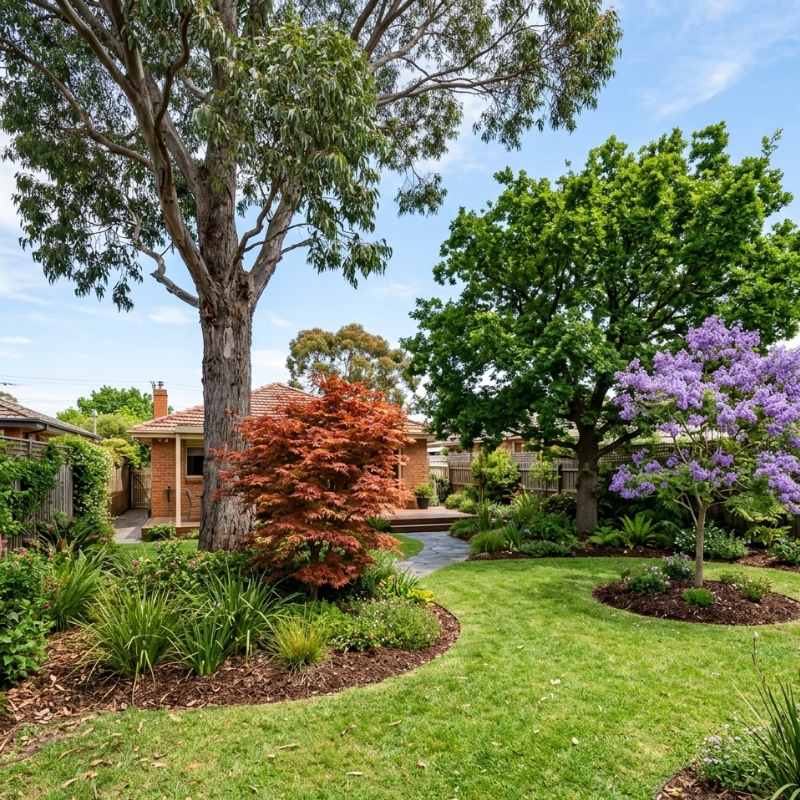
A stroll around any Melbourne suburb reveals a mix of river red gums, jacarandas, lemon-scented gums, maples, olives and more. Some homeowners proudly champion “plant local”, while others fall for the colour and quick growth of exotics. But when it comes to day-to-day tree care, are natives really lower-maintenance, more pest-resistant and longer-lived than their imported counterparts? Below, we separate fact from fiction, drawing on local arborist experience and the professional tree services in Melbourne we’re called out to deliver year-round.
Why the Native vs Exotic Debate Matters in Melbourne
Melbourne’s climate swings from scorching summer heat to cool, wet winters, with clay-heavy soils in many suburbs. These conditions shape how trees establish roots, fend off pests and respond to pruning.
Key local factors you need to consider:
- Rainfall distribution – Long dry spells followed by heavy rain can stress shallow-rooted trees, regardless of origin.
- Urban heat islands – Paved areas in inner suburbs raise soil temperature and evaporation rates, affecting species differently.
- Council overlays – Municipalities such as Banyule, Boroondara and Yarra have significant tree controls that don’t distinguish between native and exotic when it comes to permit rules.
- Biodiversity goals – The Victorian Government’s focus on habitat corridors influences local planting guides and can shape pest pressures as wildlife food sources change.
Understanding these shared challenges helps explain why many “native vs exotic” assumptions fall apart when tested on Melbourne blocks large and small.
Myth 1: Native Trees Need Less Pruning Than Exotics
The claim
“Because they evolved locally, gums and wattles can be left to grow naturally. Imported maples and elms need constant trimming.”
The reality
• Many fast-growing natives, such as eucalypts and acacias, put on several metres of new growth in the first five to ten years. Strategic formative pruning in that window is vital to reduce long-term limb failure.
• Conversely, slow-growing exotic ornamentals like Japanese maples may only need the occasional weight reduction to keep sunlight filtering through.
• The more important factor is branch structure and end-goal (shade, clearance or fruit yield), not passport status.
For a deeper dive into technique differences by species, see our existing guide on tree pruning techniques.
How to decide when to prune
- Look for crossing limbs or tight V-shaped crotches that invite future splits.
- Check for deadwood after storms or extreme heat.
- Review seasonal sap flow – many natives bleed heavily if cut in spring, while stone fruit exotics benefit from summer shaping to reduce fungal issues.
Myth 2: Exotic Trees Attract More Pests
The claim
“Imported trees are magnets for bugs because local predators don’t recognise them.”
The reality
• Several notorious pests, including elm leaf beetle, do target specific exotic hosts.
• But natives have their own adversaries – psyllids can cause unsightly “lerp” on eucalypt leaves, and borers attack stressed wattles.
• Pest pressure usually spikes when a tree is already weak from drought, compacted soil or improper pruning.
• Diverse plantings can actually reduce outbreak severity by interrupting pest pathways.
Official insight
The Victorian Government native vegetation guidelines note that monocultures, whether native or exotic, increase vulnerability to widespread pest events. Mixed species corridors are recommended to boost ecosystem resilience.
Practical pest-watch checklist
• Check leaf undersides for scale or beetle larvae as spring warms.
• Look at bark for fresh sap oozing (an early sign of borer activity).
• Encourage beneficial insects by retaining understorey shrubs and flowering groundcovers.
Myth 3: Native Trees Live Longer Than Exotic Species
The claim
“Natives will easily outlast exotics because they’re perfectly adapted to Australian soils.”
The reality
• Lifespan depends heavily on parent stock quality, site conditions and ongoing care.
• Some imported olives and oaks in Victoria are pushing 150–200 years, outliving short-lived acacia wattles (often 10–30 years).
• Many eucalypts can reach centuries if unimpeded, yet root-zone disturbance during construction frequently shortens their life on suburban blocks.
Signs a tree (native or exotic) may be struggling
- Repeated die-back in the canopy.
- Fungal brackets at the base.
- New epicormic shoots (stress growth) along major limbs.
Early intervention – mulching, targeted pruning and soil aeration – supports longevity more than the tree’s passport.
Practical Care Checklist: Read the Tree, Not the Label
- Soil moisture – Probe 10 cm down; if powder-dry, deep-water overnight regardless of species.
- Mulch depth – Maintain 5–8 cm of wood chip outside the root collar. Thick “volcanoes” smother both native and exotic trunks.
- Structural scans – Walk around the drip line each season to spot cracks, cavities or sudden leaning.
- Wildlife habitat balance – Retain some dead branches where safe; both rosellas and microbats rely on hollows in gums and plane trees.
- Pruning timing – Work with each species’ sap flow and disease risk, not simply a calendar month.
Comparison Table: Native vs Exotic Care Realities in Melbourne
Below is a quick side-by-side look at how common assumptions stack up when managing trees in real backyards.
| Aspect | Common Myth |
What Actually Matters in Melbourne Care
|
| Origin & Climate Fit | Natives cope with everything; exotics struggle |
The planting site, soil compaction and irrigation regime influence survival more than origin
|
| Pruning Frequency | Exotics need constant trimming |
Natives often need more formative shaping in early years due to rapid juvenile growth
|
| Pest Resistance | Exotics invite more insects |
Stressed trees, poor diversity and drought drive outbreaks on both groups
|
| Longevity | Natives always live longer |
Species genetics, root protection and construction damage dictate lifespan for all trees
|
| Council Permits | Permits only apply to exotics |
Many councils list significant trees by size or species canopy, covering natives and exotics alike
|
In short, maintenance inputs come down to individual tree biology and site conditions, not whether the species was born here or abroad.
What Not to Do: Common Mistakes Melbourne Homeowners Make
• Planting for instant shade – Fast-growing natives planted too close to foundations soon outgrow the space and require heavy remedial pruning.
• Over-mulching – Even hardy eucalypts can develop trunk rot if mulch is piled against the bark.
• Topping maples and liquidambars – Severe height reduction invites weak regrowth and fungal infection.
• Ignoring young tree training – Assuming “natives sort themselves out” leads to co-dominant stems and future storm damage.
• One-size-fits-all fertiliser – Many natives prefer low-phosphorus blends; high-P feeds can burn roots.
Avoiding these pitfalls keeps both native and exotic specimens thriving.
When to Seek Professional Help
You can tackle light formative pruning or mulching yourself, but consider calling an arborist when:
- Limbs are larger than 100 mm in diameter or hang over roofs and power lines.
- Decay is present at the base, making load-bearing cuts risky.
- The tree is protected under a council significant tree register – hefty fines apply for unauthorised work.
- You need expert advice on balancing habitat retention with safety.
A qualified professional will complete a risk assessment, select the right pruning method and dispose of material responsibly, saving expensive rectification later.
FAQs
1. Do native trees really need special low-phosphorus fertiliser?
Generally, many Australian natives evolved in nutrient-poor soils and can suffer from “phosphorus toxicity.” If your soil test shows low nutrient levels, choose a fertiliser labelled “native-safe” or apply well-composted organic matter instead. Exotics such as fruit trees may still need balanced N-P-K feeds.
2. Are all exotic trees considered invasive in Victoria?
No. Only species listed as “noxious weeds” or on council-specific bans are restricted. Many popular exotics like magnolias or Japanese maples pose minimal spread risk when managed responsibly. Always check your local council’s plant list before planting.
3. How often should I prune fast-growing eucalypts?
Young eucalypts benefit from light, selective pruning every one to two years in the first decade to establish strong branch structure. Mature specimens may only need safety deadwood removal every few years, provided they’re healthy and well-spaced.
4. Can I plant a native and an exotic next to each other without competition issues?
Yes, mixed plantings can enhance pest resilience and aesthetic diversity. Just match species for sun exposure, mature size and water needs, and maintain adequate root zones between trunks to minimise resource competition.
5. Which lasts longer in Melbourne clay soils – gum trees or oaks?
Both can live well over a century if root plates remain uncompacted and drainage is improved around the drip line. Clay cracks during drought then swells when saturated, stressing roots on any species. Installing mulch rings and aerating soil supports longevity for gums and oaks alike.
Final Thoughts
The native-versus-exotic debate often misses the bigger picture: every tree in a Melbourne yard faces the same climate swings, soil constraints and urban pressures. Success hinges on right-plant-right-place selection, early structural pruning, consistent soil care and timely pest checks. Keep an eye on each specimen’s real-world signals and you’ll enjoy healthier shade, blossom or habitat value—no matter where the seed first sprouted.