

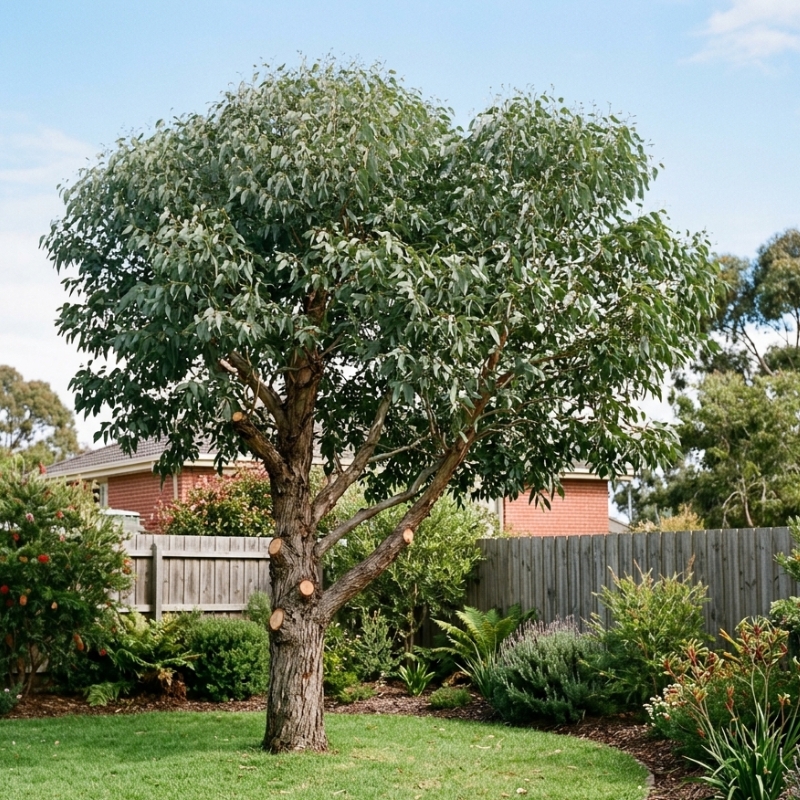
A mature gum leaning over a pergola. A pencil pine brushing the powerlines. A jacaranda that has stopped flowering. Every garden throws one of these up eventually, and the instinct is nearly always the same: take out big chunks of canopy, quickly, and reclaim the light. But how those cuts get made decides whether the tree grows back safely or turns into a standing maintenance bill. Two terms come up over and over, tree lopping and selective pruning. They sound like near neighbours. The results differ enormously for plant health, safety, compliance and what you end up spending.
Understanding Tree Lopping
Lopping means cutting back large sections of a tree’s crown to reduce its height or spread, usually in one session. Branches come off at arbitrary points, without much regard for the tree’s natural growth points. People choose it because:
- It delivers an instant change to size and shape.
- It looks less labour-intensive than staged work.
- It quotes cheaper as a one-off.
The reality tends to be different. Take significant branches off at random points and you shock the vascular system, and the tree responds defensively. Epicormic shoots, those weak fast-growing spindles, push out within months, often more numerous than the branches they replace. They are attached shallowly, close to the surface of the wood, which is exactly why they snap out in high winds. That means repeat call-outs, or property damage. A properly planned professional tree lopping program mitigates some of this by combining reduction cuts with after-care. Casual lopping, though, is notorious for shortening a tree’s life.
How Selective Pruning Works
Selective pruning takes the slower, anatomy-aware route. An arborist works out which limbs are crowding the canopy, crossing over each other, or carrying disease. The cuts go just beyond the branch collar, which is where the tree’s own defensive tissue can seal the wound over. Instead of stripping metres of height in an afternoon, the canopy gets thinned progressively and balanced, so the weight stays distributed where it should be.
Benefits include:
- Improved airflow and light without shocking the tree.
- Strong scaffold branches encouraged, which is what resists storm damage.
- Easier compliance with councils, which almost universally favour health-centred trimming.
It looks far less dramatic on the day. It also keeps the crown structurally sound for years, which is what spares you the emergency call when a branch lets go.
Comparing Outcomes That Matter
Tree Health
Lopping usually strips away too much foliage at once. Leaves are how the tree feeds itself, so losing them forces the roots and the stored energy reserves to bankroll a flush of new, weaker shoots. Pruning keeps enough leaf area for the tree to function normally while the hazards come out systematically.
Safety
Because lopping triggers rapid, weakly attached regrowth, the hazard often just shifts six months down the calendar. It also demonstrates how incorrect lopping shortens a tree’s life, as large wounds, repeated stress and creeping decay compound over time. Selective pruning takes out the risky branches while leaving intact the tree’s own ability to compartmentalise a wound and form protective callus tissue. That is what actually reduces the chance of a future failure.
Aesthetics
A lopped tree can end up looking like a telephone pole with tufts on top, which does nothing for street appeal. A well-pruned canopy keeps its natural form. If the property is going on the market, buyers do notice, and they will price replacement into an offer.
Cost Over Time
A single lopping session usually reads cheaper on the first invoice. Then factor in the likely second visit within a couple of years, the disposal fees for all that regrowth, and the possibility of a storm-damage excess. The ledger swings back the other way soon enough. Pruning costs spread across longer intervals, and they cut down the urgent call-outs, which are always the expensive ones.
Melbourne Regulations and Hidden Risks
Councils across Greater Melbourne, Merri-bek and Stonnington and Yarra among them, apply planning overlays that control what you can do to a tree. Vegetation Protection Overlays, Significant Landscape Overlays, Environmental Significance Overlays and Heritage Overlays all sit on different streets, sometimes on different halves of the same street, and each carries its own schedule. Plenty of homeowners assume that anything under a certain trunk diameter is automatically exempt. Do not rely on that. The exemptions differ council by council, and the only way to know what governs your particular block is to pull a Planning Property Report for your address from the Victorian Planning Portal. It takes a few minutes and it tells you exactly which zones and overlays apply. Penalties for working without a permit run into the thousands.
Insurance is the other quiet trap. Home policies vary, but many contain exclusions for damage that traces back to poor maintenance or to work done by someone unqualified. If a wind-thrown branch comes down on a neighbour after an aggressive lop, an insurer may well ask who did the work and what condition the tree was in. Read your PDS rather than assuming you are covered. Certified arborists keep detailed pruning records, and those records are what demonstrate duty of care when the winter gales arrive.
When Lopping Still Makes Sense
There are genuine scenarios where large-scale reduction cuts remain the pragmatic call:
- Trees with irreparable storm damage, where a balanced form simply no longer exists.
- Power authority directives demanding immediate clearance around live lines.
- Stump conversions, where the owner is removing the tree inside twelve months but needs the risk brought down in the meantime.
Even then the cuts should target unions just above lateral branches, so the tree can form natural callus rather than throw stress shoots. Talk to an AQF Level 5 arborist before anyone starts a saw.
Situations Pruning Handles Better
Selective pruning earns its keep whenever longevity is the goal:
- Heritage-listed species that the council wants preserved, and will ask about.
- Fruit trees, where productivity depends on getting sunlight balanced across the canopy.
- Trees on your own block that shade rooftop solar. Thinning lifts panel output without gutting the shade that keeps the house cool. Note that a nature strip tree belongs to the council, so that one is their call, not yours.
- Mature eucalypts screening western windows. Selective reduction of the limbs actually overhanging the roof keeps them off the iron while the afternoon shade stays where you want it. That is a different job from a crown lift, which raises the base of the canopy for clearance underneath and will not touch a limb sitting over your roofline.
In each of these, staged thinning every three to five years is what preserves structural integrity and keeps fungal invasion at bay.
Quick Yard Decision Checklist
Run through these and the strategy usually settles itself:
- Does the tree hold sentimental, heritage or shade value you actually want to keep?
- Have you pulled the Planning Property Report for your address and read what overlays apply?
- Is there visible decay, die-back or major cracking that points to structural failure?
- Could something less invasive solve it? Cabling, bracing, or weight reduction on one limb.
- If you go ahead with drastic height reduction, are you prepared to fund annual safety assessments afterwards?
If three or more of your answers lean toward preservation, selective pruning is almost always the sustainable path.
A Final Word on Environmental Responsibility
Every large canopy that disappears from a built-up suburb takes cooling, habitat and carbon storage with it. Worth knowing how the law splits here, because it catches people out. The Victorian native vegetation rules govern plants indigenous to Victoria, so a permit is usually needed to remove, destroy or lop them. Your gum falls squarely inside that. Your jacaranda and your pencil pine do not, because they are exotics, and what governs those is your council’s overlay and local law instead. Either way the direction of travel is the same: retain healthy trees where you can. Prune thoughtfully rather than lopping indiscriminately and you work with the rules instead of against them. Your yard stays safer, the council conversations stay easy, and Melbourne keeps the leafy character that makes it worth living in.