

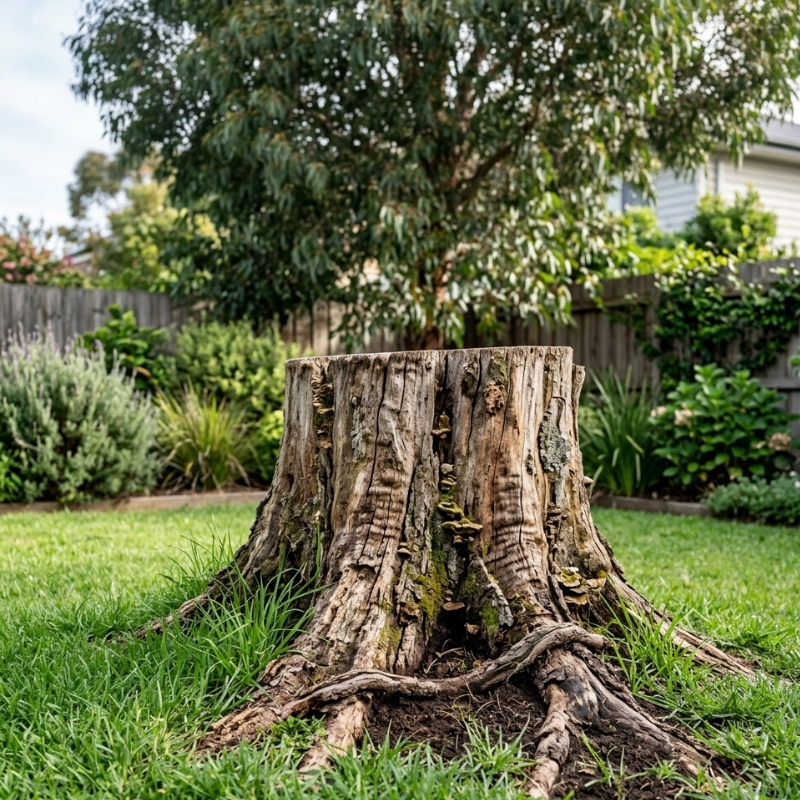
A felled tree can feel like the job is done, yet the remaining stump often lingers as an afterthought. Some Melbourne homeowners simply wait for nature to take its course, while others book professional stump grinding within days. Which path makes sense for your yard, budget and future plans? This guide walks you through the science of stump decay, the real-world pros and cons of doing nothing, the warning signs that a harmless-looking stump is turning into a liability, and practical next steps that avoid unnecessary costs.
1. How and Why Do Tree Stumps Rot?
When a living tree is cut down, the stump is essentially a block of organic material left to face the elements. Micro-organisms, fungi and insects begin breaking down lignin and cellulose. Moisture, oxygen and temperature drive the speed of that breakdown.
1.1 The Natural Decay Timeline
In Melbourne’s temperate climate, hardwood stumps such as eucalypt can take 7–10 years to disintegrate below ground level. Softer species like pine may break down in 3–5 years, but that still equates to several lawn-mowing seasons of dodging a trip hazard.
1.2 Local Factors That Change the Clock
• Moist, shaded corners encourage fungal growth and speed up decay.
• Well-drained, north-facing sites stay drier and slow the process.
• Clay soils common in outer-east suburbs hold moisture and accelerate rot yet can also allow roots to remain structurally solid for longer.
• If the tree was removed because of disease, pathogens may persist in the stump and surrounding soil, affecting new plantings.
Understanding these variables helps you gauge whether natural rot is a realistic option or a prolonged headache.
2. The Trade-Offs: Leaving It to Rot vs Removing It Now
Homeowners weigh up convenience, cost, environmental impact and future landscaping plans. The table below summarises the key differences.
| Situation | Natural Rot | Early Stump Grinding | Chemical Breakdown |
| Typical time until level with soil | 3–10 years depending on species | Same day | 6–18 months |
| Up-front cost | Minimal | Moderate | Low product cost, but repeated applications |
| Pest attraction risk | High (termites, borers, ants) | Very low once wood is chipped | Moderate; chemicals can deter some insects but dead wood still present |
| Impact on replanting or paving | Delayed until stump fully decays | Immediate | Delayed; soil may remain toxic |
| Labour & safety | No work, but trip hazard persists | Quick professional job | Repeated drilling, toxic handling |
| Environmental concerns | Fungal spores, root suckers | Mulch reused on-site | Chemical leaching, accidental plant damage |
Early removal typically wins on safety, landscaping flexibility and pest prevention, while natural rot only suits low-traffic corners where time is no issue.
3. Hidden Risks of Letting a Stump Decay on Its Own
Stumps look harmless, yet multiple problems can emerge long before they crumble away.
3.1 Termites and Other Timber Pests
Stumps provide shelter and a continuous food source. According to Agriculture Victoria, subterranean termites are active year-round in the state and often enter homes via decaying wood in gardens. Once a colony is established, full eradication becomes costly.
3.2 Trip and Lawn-Mower Hazards
Rot softens the outer wood first, creating unstable surfaces that collapse underfoot. Lawn-mower blades can strike exposed roots, sending debris flying.
3.3 Fungal Diseases
Mushrooms sprouting from a stump may look whimsical but release spores that can infect nearby ornamental or fruit trees.
3.4 Root Regrowth
Species such as poplar or willow can send up vigorous suckers from roots long after the trunk is gone, causing dense, unwanted thickets.
If you notice increased insect activity, soft punky wood, or stubborn suckers, cross-check with our deeper dive on stump-related pest problems before issues escalate.
4. Signs Your Stump Has Shifted from Benign to Problematic
Melbourne’s variable rainfall and clay soils can mask changes for months, so regular inspection pays off. Look for:
- Crumbling outer layers you can scoop away by hand.
- New saplings are emerging around or from the stump base.
- Fine sawdust or “mud leads” indicate termite activity.
- Mower wheels are catching on exposed roots.
- Mushrooms or bracket fungus after wet weeks.
Spot one or more of the above? It is time to reconsider letting nature take its course.
5. Factors That Influence How Fast a Stump Breaks Down in Melbourne
5.1 Tree Species
• Eucalypt, ironbark: dense, slow to rot.
• Conifers, poplars: softer, rot faster but attract borers.
5.2 Diameter and Root Mass
A 60 cm-wide stump contains far more lignin than a 25 cm stump; the larger mass also shades the root plate, keeping it moist and intact for longer.
5.3 Local Climate Zones
Inner-city microclimates are slightly warmer, promoting microbial activity year-round. Foothill suburbs such as Ferntree Gully experience cooler winters, pausing decay for months.
5.4 Soil Moisture and Drainage
Poorly drained yards reduce oxygen, slowing some micro-organisms yet encouraging anaerobic bacteria that cause unpleasant odours.
5.5 Previous Chemical Treatments
If herbicides were used during tree removal, residual toxins can deter decay fungi, adding years to the breakdown timeline.
6. DIY Monitoring vs Professional Removal
Some homeowners opt to observe rather than intervene. Below is a simple inspection routine.
6.1 Seasonal Check-Up
• Early autumn: probe the stump with a screwdriver; spongy texture signals advanced rot.
• Mid-spring: lift mulch to look for termite mud leads.
• After heavy rain: note any soil sinkage or cavities around roots.
6.2 Safety Precautions
Wear gloves, check for funnel-web or redback spiders under loose bark, and avoid lifting heavy root chunks without stable footing.
6.3 When to Call in the Experts
Book a consultation if:
• The stump is within three metres of the house or fence line.
• Termite or ant activity is visible.
• Children regularly play in the area.
• You plan to build, pave or replant within the next 12 months.
Grinding specialists bring purpose-built machinery that fits most suburban gate widths, manage underground service checks and leave mulch you can spread elsewhere.
7. Common Mistakes to Avoid
- Covering the stump with fill soil – This traps moisture, making decay unpredictable and attracting pests you cannot see.
- Pouring random chemicals – Household bleach or diesel contaminates soil, harms pets and rarely reaches deep roots.
- Ignoring root suckers – Regular mowing only stimulates denser regrowth, expanding the problem area.
- Assuming insurance will cover termite damage – Many home policies exclude damage caused by pests colonising old stumps.
- Waiting until construction starts – Scheduling stump grinding after trades arrive can delay projects and cost more once concrete or decking frames are in place.
8. Decision Framework: Is Natural Rot Worth the Wait?
Ask yourself the following:
- What will this space be used for in two years?
If the answer involves paving, new turf or play equipment, removal is almost always safer. - How visible is the stump?
Front-yard stumps hurt kerb appeal and property value. - Are termites or borers common in your postcode?
Timber-framed homes built pre-1995 in leafy suburbs like Ivanhoe, Camberwell or Essendon are at higher risk. - Is the stump already softening?
Advanced decay can make grinding slightly easier and faster, yet waiting too long allows roots to spread fungal pathogens.
Balancing these questions tends to push most households toward early grinding unless the stump sits in an out-of-the-way, low-risk corner.
9. Preparing for Professional Stump Grinding
If you decide removal is the better path, a little prep speeds up the job:
- Clear pot plants, toys and decor within a three-metre radius.
- Identify underground services; Dial Before You Dig maps are free online.
- Mark irrigation lines and lighting cables with spray paint or stakes.
- Trim nearby shrubs for machine access.
- Decide how you will reuse or dispose of the resulting mulch.
10. What to Do With the Space Afterwards
Once the stump is ground to below soil level, topsoil can be added immediately for:
• Re-turfing or installing synthetic grass.
• Planting a replacement tree (ideally offset 50 cm to avoid old roots).
• Building a garden bed or installing pavers.
• Extending decking where the tree once stood.
Fast action prevents the soil cavity that forms when a stump decays naturally.
FAQs
- How long does it really take for a stump to rot away in Melbourne?
Most softwood stumps take at least three years, while dense hardwoods can last a decade or more. Micro-climate, soil moisture and stump size are major factors, so there is no guaranteed timeline. - Will burning out a stump speed things up?
Open-air stump fires are illegal in many Melbourne councils, pose bushfire risks, and rarely consume deep roots. You are usually left with a charred, unsightly core and potential fines. - Can I speed up natural rot without chemicals?
Drilling holes and keeping the wood moist invites fungi, but results vary and can still take years. It is labour-intensive and may attract pests quicker than decay. - Does stump grinding remove all the roots?
Grinding typically reaches 150–300 mm below ground, enough to sever root contact with the stump. Fine roots remain but die off once the food source is gone. - Is stump removal worth it if I plan to sell my house soon?
Yes. A clean, level yard improves first impressions and removes any pest-worry questions from buyers’ building inspectors.
Final Thoughts
Letting a tree stump rot naturally costs nothing now, but it can carry hidden expenses in pest treatments, delayed landscaping and safety hazards. Weigh up your future plans, termite prevalence and how long you are prepared to live with an immovable obstacle. In many suburban Melbourne backyards, grinding and reclaiming the space sooner provides peace of mind and keeps the garden flexible for whatever comes next.