

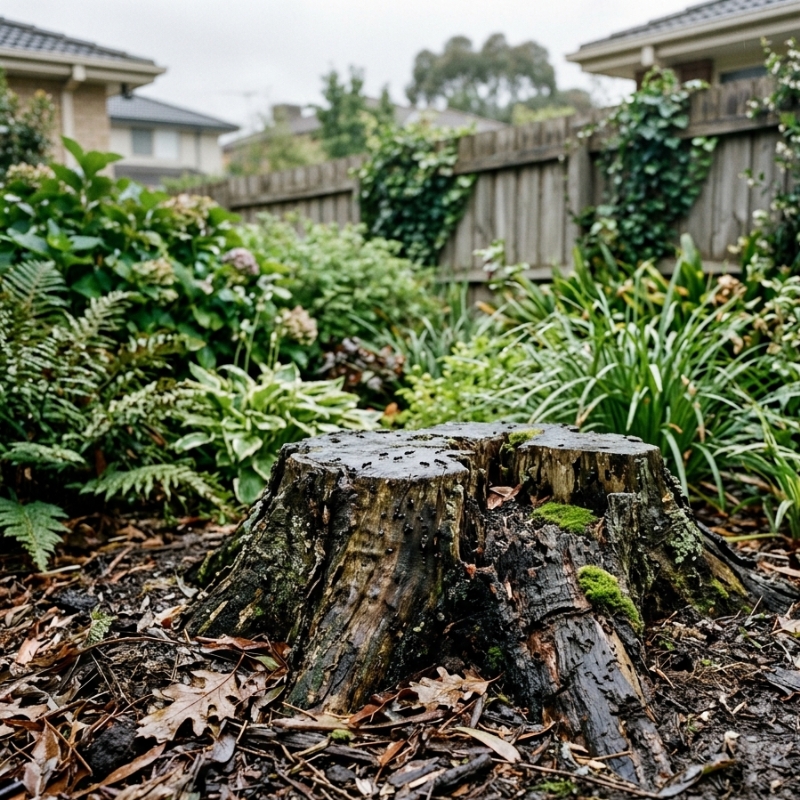
An old tree stump can sit quietly in the backyard for months (or years) without drama… until one day you notice ants pouring out of a crack, a patch of soft wood that crumbles underfoot, or mushrooms popping up after rain. In Melbourne, that’s the moment a lot of homeowners start wondering: is this stump attracting pests, and could it turn into a bigger issue for the property?
The short version is that stumps can attract pests, but usually because they become a damp, sheltered micro-habitat over time. That habitat can suit all sorts of backyard visitors—ants, beetles, slaters, cockroaches, spiders—and in some cases, termites. The real risk isn’t simply “bugs exist in the stump”. It’s whether the stump (and the damp, decaying conditions around it) increases the chances of pests moving toward timber features closer to the home.
This guide is written for Melbourne conditions: cooler, wetter winters; hot spells that can hide ongoing moisture in shaded corners; and those heavier soils that can hold water longer than you think. You’ll learn what attracts pests to stumps, how to tell termites from ants, what rot is really telling you, and what to do next if you’re concerned.
Why old stumps attract pests in the first place
A stump changes in stages.
• A fresh stump is often relatively hard and dry on top (especially if it’s exposed to sun and wind).
• As months pass, cracks open, water gets in, fungi begin breaking down the wood, and the stump starts holding moisture.
• Once the core stays damp, the stump becomes shelter, food, and a stable environment—exactly what many insects and other pests look for.
The three big “attractors” are:
• Moisture: damp wood + damp soil is a strong driver of pest activity
• Shelter: cavities, cracks and softened timber create hiding places
• Food: decaying wood, fungi, and the tiny organisms in decomposing timber
In other words, the stump isn’t a magical pest magnet by default. It becomes one when it turns into a consistently damp, protected nook—especially in a shaded part of the yard.
Q&A: Does every stump attract pests?
Not at all. A stump that stays dry, sits in full sun, and hasn’t started rotting may have minimal pest activity. It’s the combination of rot + moisture + cover that usually changes the equation.
Termites vs ants: why people confuse them
If you’ve seen insects in or around a stump, ants are the most common culprit. Termites do exist in Melbourne and across Victoria, but they’re not what’s crawling out of every stump.
What ants are usually doing
Ants might be:
• nesting in the stump because it’s soft enough to excavate
• hunting other insects attracted by moisture and decay
• using the stump as a protected “hub” near food sources in garden beds
Ants often move quickly in the open, following visible trails. Seeing ants can be annoying, but it can also be useful information: ants often indicate the stump is damp and breaking down.
What termites are usually doing
Termites feed on cellulose in wood, and many species travel through soil to find new timber sources. A stump can be a food source or part of their foraging area. The bigger concern is whether there are easy pathways from damp timber in the yard toward timber features around the home.
If you want Victorian-specific prevention guidance, this is a good baseline resource: Vic Health termite information.
Q&A: Are ants in a stump a sign of termites?
Usually, no. Ants and termites can both be around timber, but ants don’t automatically mean termite activity. Ants are often there because the stump is damp and provides shelter. Termites are more likely when there are signs of soil-based access and feeding inside the wood rather than surface activity.
What rot is really telling you
Rot isn’t just “old wood doing old wood things”. Rot is a signal that the stump is holding moisture long enough for fungi and microorganisms to break it down. That matters because persistent moisture is also a major factor behind a lot of pest problems—especially when timber meets soil.
Common stump-rot signs include:
• wood that feels soft, spongy, or “punky”
• cracks widening into hollow pockets
• mushrooms or fungal growth near the base
• a musty smell after rain
• the stump breaking apart when disturbed
In Melbourne, you can get a few warm, dry days that make everything look fine—while shaded corners remain damp underneath. A stump tucked beside a fence line, under dense planting, or in a low spot can stay wet much longer than the rest of the yard.
What pests do stumps commonly attract in Melbourne?
Here’s what commonly shows up around old stumps, and what it usually means.
• Ants: often a moisture + shelter indicator; sometimes excavate softened timber
• Beetles and larvae: many feed on decaying wood or fungi; usually nuisance-level
• Slaters (woodlice): love damp, decaying plant matter; more of a moisture clue than a threat
• Cockroaches: attracted to damp shelter; can wander to patios and outdoor entertaining zones
• Spiders: follow the food chain; if insects are active, spiders won’t be far behind
• Termites: less commonly seen directly, but important to take seriously if suspected
A helpful mindset is this: many stump pests are symptoms of a damp habitat. Reduce the damp habitat, and the “why” behind the pest activity often fades.
How to tell termites from “normal stump bugs”
Because the stakes are higher with termites, it helps to know the most common differences you can observe without turning your backyard into a demolition site.
Signs that lean toward termites
• timber that sounds hollow when tapped
• internal “galleries” (layered channels) when wood is opened
• mud-like material packed into cracks or voids
• fine mud tubing on nearby hard surfaces (more common on walls, piers, fence posts than on the stump itself)
• activity that seems connected to soil access rather than surface trails
Signs that lean toward ants or other insects
• lots of visible insects are moving quickly in the open
• well-defined above-ground trails
• insect activity concentrated in the outer bark or surface layers
• obvious moisture-loving insects (slaters, cockroaches) appearing together
Q&A: If I poke the stump and it crumbles, is that termites?
Not automatically. Crumbling can simply be rot. Termite-affected timber can look intact on the surface but be hollowed out inside. If you’re seeing widespread softness plus other signs (mud packing, hollow sections, nearby timber-to-soil contact), that’s when it’s worth treating it as a higher-risk situation.
The Melbourne factors that can raise stump pest risk
Every yard is different, but a few local patterns show up again and again.
Heavy or poorly draining soil
Many Melbourne suburbs have soil that holds water. Even if the surface looks dry, moisture can linger around roots, old stump bases, and shaded fence lines.
Shaded corners and fence lines
Stumps beside fences often stay cooler and damp longer, especially when garden beds are built up around them.
Timber landscape features are nearby
Sleepers, garden edging, pergola posts, old fence bases, and timber steps can all become “stepping stones” for pests if they’re in contact with soil or kept damp.
Winter wet + spring growth
Wet winters can keep stumps active (moisture-wise), while spring growth encourages more mulch, more watering, and more garden activity—sometimes accidentally increasing dampness around timber.
A simple stump risk check you can do in 5 minutes
You’re not trying to “diagnose termites” with a torch and a hunch. You’re trying to decide whether this stump is low concern, monitor-worthy, or something to act on sooner.
Lower risk
• stump is hard and dry most of the year
• no long-term dampness around the base
• not close to timber structures
• minimal insect activity
Monitor-worthy
• stump is older and cracking
• dampness lingers after rain
• ants appear frequently (especially after wet weather)
• mulch or soil has been built up around it
Higher risk
• stump is soft, rotten, or partially hollow
• the area stays damp or drains poorly
• there are nearby timber-to-soil contact points (sleepers, deck posts, old timber edging)
• you suspect termites or there’s a history of termite issues on the property
If you land in “higher risk”, it doesn’t mean panic. It means the conditions that support pests may be present—and removing those conditions is smart property hygiene.
Moisture control: the fastest way to reduce pest attraction
Even before you make any decision about the stump itself, reducing moisture around it can lower pest activity.
Practical steps that actually help:
• fix drips and leaks (outdoor taps, irrigation lines, air con runoff)
• improve drainage so water doesn’t pool near the stump
• avoid piling mulch thickly against the stump base for long periods
• keep garden beds from bridging onto fences or structures
• store firewood off the ground and away from the home
Q&A: Does watering the garden make stumps worse?
It can, especially in shaded corners. Occasional watering isn’t the issue; it’s chronic dampness. If the stump area never really dries out, pests have a more stable habitat.
What to do if you suspect termites in a stump
If you’re seeing signs that genuinely resemble termite activity:
- don’t go smashing the stump apart (disturbing activity can make assessment harder)
• keep kids and pets away from the area until you’re confident
• check nearby timber features for soil contact and dampness
• consider a licensed termite inspection if signs are consistent or if the stump is close to structures
This is also where it helps to think beyond the stump. Termites are often about access and moisture pathways, not one isolated timber item.
When removing the stump makes sense (without making this a sales pitch)
There are situations where leaving a stump to rot naturally is perfectly fine—especially in larger gardens, far from structures, with good drainage.
But in typical Melbourne suburban blocks, stumps often sit close to fences, garden beds, sleeper edging, decks, or pergolas. In those cases, a rotting stump can quietly remain a damp habitat for years.
If you’re weighing up options and want a clear overview that explains what changes in the yard once the stump is dealt with, here’s a practical guide to dealing with an old tree stump so you can understand the common approaches and what they mean for the space long-term.
Why rot + termites is the combination that raises eyebrows
Rot by itself usually points to moisture. Termites, where present, also thrive when conditions support consistent access and favourable moisture levels. The overlap is why people talk about stumps and termite risk in the same breath—especially when there are other timber features nearby.
If your goal is to reduce the chance of pests using the area as a long-term habitat, it helps to understand how stump grinding to reduce termite risk can fit into a broader prevention approach (particularly when moisture is part of the picture).
After the stump is handled, don’t accidentally create a new damp pocket
One common mistake is thinking “stump gone, problem solved” and then leaving a shallow depression that collects water—or mixing a lot of woody material into soil and wondering why the spot stays spongy.
Once the stump is sorted, the site often needs a little planning to avoid new moisture issues. These next steps after tree removal cover practical follow-ons like levelling, managing leftover material, and setting the area up so it doesn’t become a damp corner again.
Q&A: Can leftover wood chips attract pests?
Wood chips and mulch can hold moisture. Used thoughtfully, they’re fine. The risk rises when thick mulch is piled against timber features or kept constantly damp in a shaded spot. Aim for good airflow and avoid creating hidden, wet contact points near fences and structures.
Prevention habits that matter most around Melbourne homes
If you want the “big rocks” to focus on, these are the habits that consistently reduce pest risk.
• keep the perimeter of your home dry (avoid garden beds and mulch bridging onto walls or weep holes)
• minimise timber-to-soil contact around structures (sleepers, posts, timber edging)
• maintain drainage so water doesn’t sit against the house or fence lines
• keep storage timber (firewood, offcuts) elevated and away from the home
• check shaded corners after heavy rain (they often stay damp longer than you think)
This isn’t about turning your yard into a sterile zone. It’s about removing the conditions that pests rely on: persistent moisture, shelter, and easy pathways.
FAQs
Can an old tree stump attract termites in Melbourne?
It can, particularly if the stump stays damp and there are nearby timber features with soil contact. A stump doesn’t guarantee termites, but it can contribute to conditions that suit them.
Are ants in a stump always a problem?
Usually it’s more of a clue than a crisis. Ants often mean the stump is damp and breaking down. That said, if the stump is close to the house or other timber features, it’s worth lowering moisture and monitoring activity.
How can I tell termite activity from normal rot?
Rot tends to look soft and crumbly and may come with fungi. Termite activity may involve hollow-sounding timber, internal galleries, and mud-like packing or tubing. If you’re uncertain, it’s safer to treat it as a verification issue and get a professional assessment.
Does removing the stump remove pest risk completely?
It can reduce habitat and food sources, but moisture and access pathways still matter. If the yard has ongoing dampness or timber-to-soil contact around structures, prevention should address those factors too.
Is it okay to leave a stump to decay naturally?
Sometimes, yes—especially if it’s far from structures and the area stays relatively dry. In smaller suburban yards, stumps often stay damp and can remain a long-term pest habitat.
What should I do first if I’m worried about termites?
Start with moisture control and removing timber-to-soil “bridges” near structures. If you have strong signs or previous termite history, a licensed termite inspection is a sensible next step.