

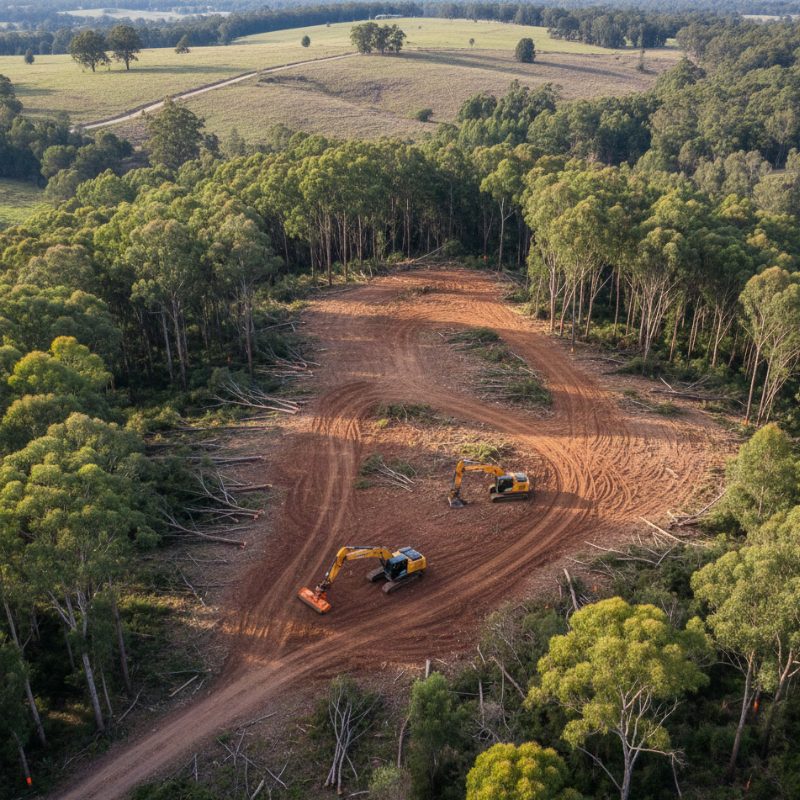
Removing vegetation from a property in Melbourne involves far more than cutting down trees or clearing scrub. Victoria has some of Australia’s most structured planning controls around native vegetation, environmental overlays and bushfire management. Failing to understand these rules can result in fines, project delays or mandatory restoration orders.
Whether you own a suburban residential block, semi-rural acreage, or development land in Melbourne’s growth corridors, understanding the permit process and compliance framework is essential before beginning any large-scale vegetation works.
This guide explains how vegetation removal regulations apply in Victoria, when permits are required, how overlays affect your land, and includes a practical checklist to help you prepare your site properly.
Why Vegetation Removal in Melbourne Is Highly Regulated
Victoria operates under a statewide Native Vegetation Removal framework embedded within the Victorian Planning Provisions. These controls aim to balance development with biodiversity protection and bushfire risk management.
Under Victoria’s Native Vegetation Removal framework, a planning permit is generally required to remove, destroy or lop native vegetation unless a specific exemption applies. These rules form part of the Victorian Planning Provisions and are enforced at the council level. The official guidance is outlined by the Victorian Government’s Native Vegetation Removal Regulations.
The official Victorian Government guidance on native vegetation removal regulations outlines the core framework and offset requirements that apply across the state.
For property owners, the key takeaway is this: assumptions can be costly. Even small-scale clearing can trigger compliance requirements.
Do You Always Need a Permit to Remove Vegetation?
Not always — but many Melbourne property owners underestimate how often approval is required.
Permit requirements depend on:
- Whether the vegetation is native
- The size and trunk diameter of trees
- The planning overlays affecting your property
- Whether the site is within a Bushfire Management Overlay
- The purpose of removal (development, safety, access, etc.)
- Whether exemptions apply
For example, removing a small ornamental tree in an inner-city backyard may not require approval. Clearing multiple mature eucalypts on a semi-rural block in Warrandyte almost certainly will.
What Counts as Native Vegetation?
Native vegetation includes:
- Trees indigenous to Victoria
- Native shrubs
- Groundcover species
- Native grasses
It does not matter whether the vegetation was planted decades ago or self-seeded naturally. If it is classified as native, it may fall under protection.
If you are unsure, a qualified arborist or ecological consultant can determine species classification before any works begin.
Planning Overlays That Affect Melbourne Properties
Planning overlays are often the deciding factor in whether vegetation removal requires council approval.
Bushfire Management Overlay (BMO)
Many properties in outer Melbourne — particularly in the Dandenong Ranges, Yarra Valley, Hurstbridge and parts of the Mornington Peninsula — are subject to a Bushfire Management Overlay.
Under a BMO:
- Vegetation removal may be required to establish a defendable space
- Clearing must follow strict guidelines
- A Bushfire Management Statement may be necessary
- Over-clearing beyond approved limits can trigger penalties
Importantly, bushfire safety does not automatically override vegetation protection rules. The removal must still align with prescribed limits.
Environmental Significance Overlay (ESO)
An ESO protects environmentally sensitive areas. In these zones, vegetation removal may require:
- Environmental reports
- Detailed site assessments
- Council approval
These overlays are common near waterways, habitat corridors and conservation areas.
Vegetation Protection Overlay (VPO)
A VPO is specifically designed to protect certain tree species or landscapes. Even a single protected tree removal may require a planning permit.
Before undertaking any major works, checking your property overlays through your local council planning portal is critical.
The Risks of Clearing Without Approval
Clearing vegetation without proper authorisation can result in serious consequences.
Potential outcomes include:
- Substantial fines
- Stop-work notices
- Mandatory replanting
- Biodiversity offset obligations
- Delays to building permits
- Legal enforcement proceedings
For developers and owner-builders, unauthorised removal can jeopardise construction schedules and financing arrangements.
This is especially important for larger acreage properties where rural and residential land clearing may involve multiple vegetation classes and planning overlays.
A Practical Melbourne Site Preparation Checklist
To reduce risk and streamline your project, follow this structured preparation process before starting any vegetation works.
1. Confirm Zoning and Overlays
Check:
- Property zoning classification
- Bushfire Management Overlay
- Environmental or Vegetation Protection Overlays
- Significant Landscape Overlays
Understanding these controls determines the compliance pathway.
2. Identify Native Vegetation
Engage:
- A qualified arborist
- An ecological consultant, if required
- A planning professional for overlay interpretation
Accurate species identification is the foundation of compliance.
3. Determine Permit Requirements Early
Clarify:
- Whether a planning permit is required
- Whether exemptions apply
- If removal is linked to a building permit
- Whether offsets will be triggered
Early permit applications prevent costly construction delays later.
4. Understand Biodiversity Offset Obligations
Victoria’s framework operates on a “no net loss” principle. Ifthe council approves native vegetation removal, you must offset the ecological impact by:
- Purchasing biodiversity credits
- Protecting vegetation elsewhere
- Entering into conservation agreements
Offset costs can materially affect project budgets.
5. Evaluate Site Conditions
Beyond regulatory compliance, practical preparation matters.
Assess:
- Terrain slope and soil stability
- Machinery access points
- Erosion and drainage management
- Neighbouring structures
- Utility services
This is particularly relevant on sloping blocks across Melbourne’s eastern suburbs and peri-urban areas.
6. Align Vegetation Removal With Construction Planning
If preparing for a build:
- Confirm final building siting
- Avoid removing trees that influence design compliance
- Coordinate with engineers and builders
- Sequence works logically
When you structure site preparation properly, you turn vegetation removal into a planned stage of your development timeline rather than reacting to problems later.
For complex sites, engaging Melbourne land clearing specialists ensures vegetation removal integrates safely with compliance requirements and site logistics.
Melbourne Property Scenarios Explained
Understanding how regulations apply in real-world scenarios helps clarify risk.
Suburban Residential Block
In established suburbs such as Balwyn, Glen Waverley or Essendon:
- Significant tree overlays may apply
- Council approval is often required
- Neighbour consultation may influence outcomes
Even a single mature tree can trigger planning controls.
Semi-Rural or Acreage Property
In areas such as Wonga Park, Pakenham Upper or Research:
- Bushfire overlays are common
- Native vegetation volumes may be higher
- Larger-scale removal can trigger offset requirements
These properties often require structured, staged vegetation management.
Property owners preparing for major development phases frequently rely on professional land clearing solutions in Melbourne to ensure vegetation removal is aligned with permit approvals and environmental conditions.
Growth Corridor Development Sites
In suburbs such as Clyde North, Mickleham or Tarneit:
- Subdivision approvals often contain vegetation conditions
- Pre-construction site works must align with endorsed plans
- Civil sequencing matters
Removing vegetation outside approved development staging can delay titles and construction.
When Is Professional Support Recommended?
Vegetation removal becomes more complex when:
- Multiple overlays apply
- The site exceeds the standard residential scale
- Bushfire compliance is required
- Machinery access is limited
- Environmental assessments are involved
Experienced operators understand how to work within regulatory frameworks while preparing land safely and efficiently.
For larger blocks, sloping sites or acreage, property owners often consult teams experienced in rural and residential land clearing to ensure the process is managed methodically and in line with Victorian standards.
Common Questions From Melbourne Property Owners
Can I remove trees for bushfire safety without approval?
Limited exemptions may apply for defendable space, but clearing beyond guidelines often requires a permit.
How long does a vegetation removal permit take?
Timeframes vary by council but can range from several weeks to several months, depending on assessment complexity.
What is a biodiversity offset?
A biodiversity offset compensates for the ecological impact caused by native vegetation removal. It ensures environmental balance under Victorian policy.
What if I remove vegetation accidentally?
You should notify the council immediately. Penalties may still apply, but proactive communication can reduce enforcement severity.
Are non-native trees regulated?
Generally, non-native species are less regulated, but overlays can still apply in some areas.
Who determines if vegetation is protected?
Councils rely on planning schemes, ecological assessments and arborist reports to determine protection status.
Connecting Compliance With Effective Site Preparation
Vegetation removal in Melbourne sits at the intersection of environmental responsibility, bushfire risk management and property development.
A structured approach protects you from:
- Financial penalties
- Construction delays
- Environmental damage
- Legal enforcement
Proper preparation ensures your block transitions smoothly from overgrown to development-ready while remaining compliant with Victorian regulations.
Where projects involve scale, complexity or overlay triggers, experienced Melbourne land clearing specialists can assist in aligning vegetation removal with permit requirements and safe site execution.
The key is not rushing into machinery mobilisation before completing due diligence. Compliance first. Clearing second.
By following a practical checklist and understanding Melbourne’s regulatory framework, property owners can move forward confidently — knowing their site preparation is both legally sound and strategically planned.