

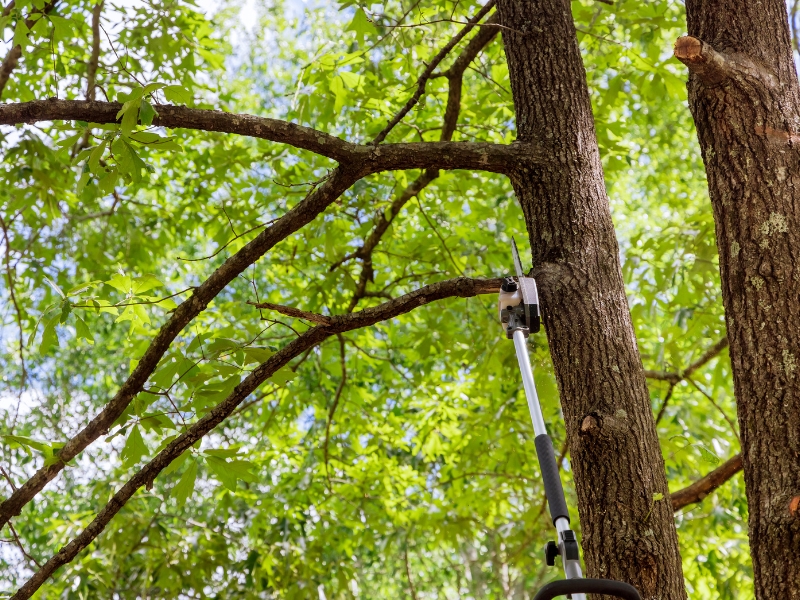
Trimming trees at the right time is essential to encourage robust growth, prevent disease, and maintain the safety of your outdoor space. The wrong timing can lead to stunted development or leave your trees exposed to pests and harsh weather. Across different regions and seasons, the best time to prune varies based on species, climate, and tree health. It’s not just about keeping trees tidy — it’s about supporting long-term vitality. This article explores the importance of timing, seasonal cues, and expert care to help you decide when to trim trees effectively.
Why does incorrect timing harm tree growth?
Trimming trees at the wrong time disrupts their natural growth cycle and weakens their structural integrity. This harm often results from pruning during periods of high stress or active growth, when trees are most vulnerable. Here are the key impacts of bad timing on tree health:
- New cuts made in peak summer can drain tree energy, as the tree struggles to seal wounds in hot, dry weather.
- Winter pruning on sensitive species can lead to frost damage, especially in regions with unpredictable cold snaps.
- Autumn trimming often triggers new growth too late in the season, leaving branches exposed to winter stress and dieback.
- Spring pruning during bud burst may reduce flowering or fruit yield, affecting the overall vitality of flowering and fruit-bearing trees.
Trimming outside optimal windows may not be immediately obvious, but over time, it can lead to long-term structural issues and reduced canopy density. That’s why many homeowners turn to trusted tree trimming solutions to ensure their timing is right from the start.
What happens if you trim trees too often?
Frequent trimming robs trees of energy, leading to weakened limbs, less foliage, and slower recovery. Over-pruning creates stress that affects a tree’s ability to photosynthesise and grow normally. Here are the effects of over-trimming:
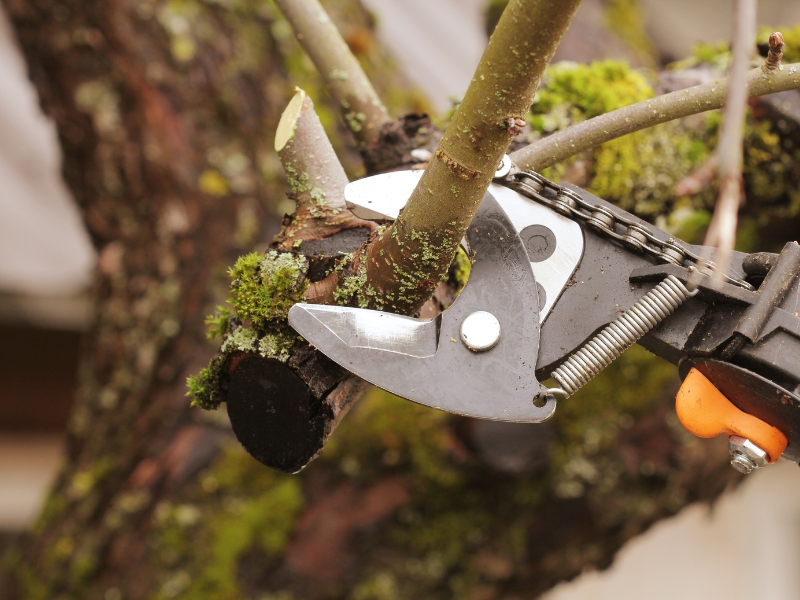
- Removing too much foliage limits the tree’s energy production, which slows overall development and can increase pest problems.
- Constant cutting disrupts natural branch structure, resulting in unstable and poorly formed regrowth.
- Weakened limbs from frequent cuts become vulnerable to snapping in storms, raising safety concerns for nearby structures.
- Excessive trimming invites diseases by exposing open wounds repeatedly, making it harder for trees to heal between cuts.
Trees need time to recover after pruning, especially mature species. If you understand when a big tree requires trimming, you’ll prevent over-pruning and give your trees a chance to stay strong and balanced.
Can poor pruning timing make trees more vulnerable to disease?
Incorrect pruning schedules absolutely increase a tree’s risk of infection and fungal invasion. Open wounds made during wet or humid periods become easy entry points for pathogens. Here are the common disease risks linked to bad timing:
- Pruning during rainy seasons raises the risk of fungal spores entering fresh cuts, especially in damp climates like coastal NSW.
- Wounds left open in hot weather attract insects, which often carry bacteria or viruses into vulnerable tissue.
- Excess sap flow from early spring pruning can stress trees, lowering natural defences and causing internal decay.
- Autumn cuts can leave tissue unsealed before winter sets in, leading to freeze damage and disease over time.
Many diseases take hold before symptoms are visible, so prevention is key. Considering important safety measures for managing risks of tree trimming is a smart move for both your trees and your safety.
When should you trim trees in different seasons?
The best time to trim trees depends on their species and purpose — but generally, late winter to early spring is the ideal window. This timing supports strong spring growth while avoiding frost or fungal threats. Here are the seasonal tips for effective tree trimming:
- Late winter (July–August) is ideal for deciduous trees, as sap flow is low and tree structure is easy to assess.
- Early spring is perfect for shaping and removing weak limbs, especially for fruit-bearing trees that bloom early.
- Summer pruning can help manage overly vigorous trees, but it should be minimal to avoid heat stress.
- Autumn trimming is best avoided, as new growth won’t harden before winter and can attract pests.
Below is a quick reference to help guide the best trimming of windows across common tree types:
| Tree Type | Best Time to Trim | Avoid Trimming During | Notes |
| Deciduous (e.g. Elm) | Late Winter | Autumn | Trim when dormant for best results |
| Fruit Trees (e.g. Apple) | Early Spring | Mid-Summer or Autumn | Supports flowering and harvest cycle |
| Native Trees (e.g. Gum) | Late Spring | Winter | Avoid trimming in extreme cold |
| Tropical Trees (e.g. Palm) | Late Dry Season | Wet Season | Reduces disease and supports new fronds |
Timing your tree care with the seasons helps ensure a healthy canopy, fewer pests, and better resistance to extreme weather. It also minimises regrowth stress and enhances aesthetic shape.
How do local climates affect proper branch trimming?
Different Australian climates demand different tree care schedules. Humid, dry, coastal, and inland environments all influence when to trim trees safely and effectively. Here are the climate-specific considerations:
- In coastal NSW, humidity can spread fungal diseases, so dry-season pruning is safer and more effective.
- Dry inland areas are better suited to early spring cuts, before harsh sun and heat stress take hold.
- Tropical climates may require multiple light prunings, spread throughout the year, to manage rapid growth cycles.
- In frost-prone zones, avoid autumn cuts, as tender new shoots won’t survive sudden temperature drops.
Professional trimming accounts for microclimates, moisture levels, and storm risks. That’s why many locals prefer experienced teams familiar with regional challenges.
Why should professional arborists handle major tree trimming?
Professionals know how to trim trees safely, using the right techniques, tools, and timing. For mature or high trees, expert care prevents structural damage and personal injury. Here are the benefits of expert pruning:
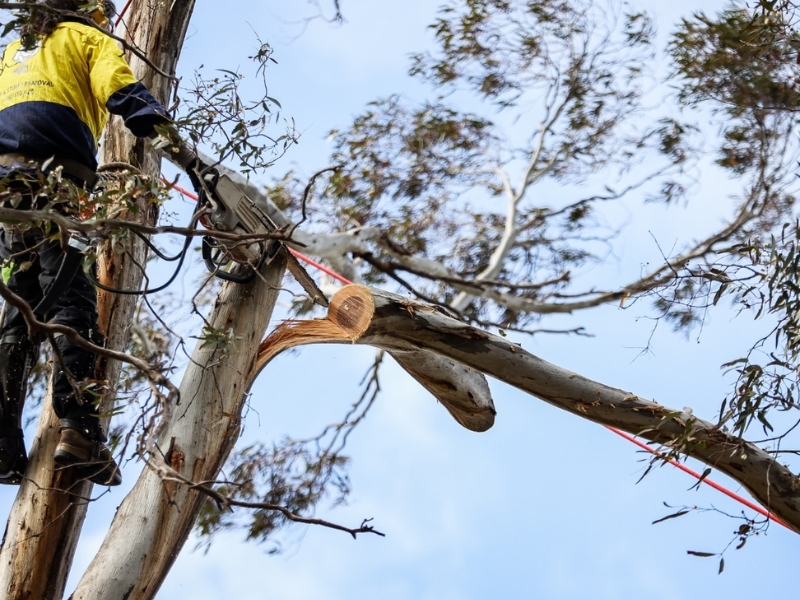
- Arborists assess branch health before cutting, so they remove only what’s needed for safety or balance.
- Trimming large trees requires safety gear and equipment, which prevents accidents and ensures compliance with local laws.
- Experts shape trees to support healthy future growth, not just for looks but for long-term strength.
- They know species-specific needs, ensuring correct cuts, angles, and healing time for every tree type.
Even a well-meaning DIY job can cause lasting harm. Knowing when and how to trim isn’t always obvious — which is why experience makes the difference.
Final thoughts on scheduling the right time to trim trees
Trimming trees at the right time is about more than just appearance — it’s about preserving structure, health, and safety for years to come. Matching your approach to the season, species, and local climate helps you avoid common mistakes. Whether you’re shaping young trees or managing large mature ones, informed timing reduces stress and improves results. For expert help, you can explore how The Yard supports safe and sustainable tree care that aligns with the needs of your property and local conditions.