

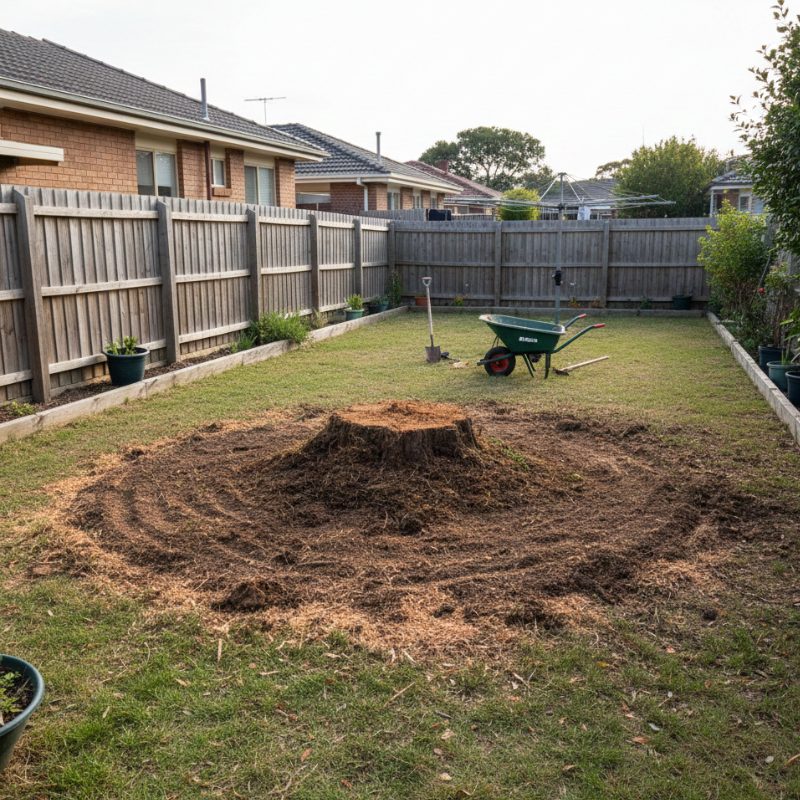
Removing a tree is only half the job. What remains underground — and slightly above it — can affect your soil, your landscaping plans and even the safety of your backyard.
One of the most common questions Melbourne homeowners ask is: When is the right time to deal with the leftover stump? Should it be done immediately after tree removal? Is it better to wait? Does season matter? And how does it impact future planting?
The answers depend on three major factors:
- Soil condition
- Safety and property risks
- Replanting or landscaping plans
Understanding how these interact — particularly in Melbourne’s variable climate — will help you decide on the right timing and avoid long-term issues.
Why Timing Matters After Tree Removal
A tree stump might look harmless, but what’s happening beneath the surface continues long after the trunk is cut down.
Roots begin to decay. Soil moisture shifts. Microorganisms break down woody material. In some cases, pests move in.
The timing of stump grinding plays a major role in:
- Preventing unwanted regrowth
- Reducing trip hazards
- Minimising pest attraction
- Preparing soil for turf, paving or replanting
- Avoiding soil contamination from decaying wood
In most Melbourne residential settings, stump grinding is ideally carried out either immediately after tree removal or within the first few weeks — particularly if landscaping work is planned.
However, the best timeframe depends on your goals.
Soil Conditions in Melbourne: How They Affect Stump Timing
Melbourne’s soil types vary widely across suburbs — from heavy clay in the west to sandier loams in bayside and eastern areas. Seasonal moisture patterns also shift dramatically between dry summers and wetter winters.
Summer (Dry Conditions)
During Melbourne’s hotter months:
- Soil is often compacted and dry
- Root systems may be harder
- Access to machinery is easier (less bogging)
Dry soil can make stump grinding cleaner and more efficient. However, extremely dry clay soils may require slight moisture conditioning to reduce dust and improve grind consistency.
Winter (Wet Conditions)
In winter:
- Soil becomes saturated
- Heavy equipment may cause surface damage
- Clay soils become sticky and compact easily
If removal is delayed into a wet period, soil structure may be disrupted more easily. This can affect replanting later.
For soil health preservation, many professionals suggest scheduling stump grinding during stable weather, not during heavy rainfall periods.
For broader planting and soil health guidance, the Victorian Government’s environmental resources provide useful context for managing vegetation and soil sustainably.
How Long Should You Wait After Tree Removal?
Quick Answer
If you plan to landscape, lay turf or replant, the stump should ideally be dealt with within 2–4 weeks after tree removal. Waiting months or years can complicate soil preparation and increase pest risks.
That said, there are a few scenarios where waiting might make sense.
Scenario 1: Immediate Landscaping Plans
If you’re:
- Installing new turf
- Building a deck or paving
- Planting a new tree
- Levelling the yard
Then, delaying stump removal can slow the entire project.
The remaining root plate and woody mass will interfere with:
- Level grading
- Soil compaction
- Drainage patterns
- New root development
In these cases, coordinating tree removal and stump grinding close together is typically the most efficient approach.
Scenario 2: No Immediate Plans
If the area is not being landscaped straight away, some homeowners delay removal. However, leaving a stump too long can lead to:
- Fungal growth
- Termite attraction
- Trip hazards
- Mower blade damage
- Root suckering (in some species)
In Melbourne suburbs with established gardens, decaying stumps can also attract wood-boring insects.
If you’re unsure whether waiting could cause issues on your property type, seeking professional stump grinding advice can help you assess soil conditions and risks specific to your yard.
Soil Impact: What Happens Underground?
Once a tree is cut down, its roots do not immediately disappear.
Root Decay Timeline
In Melbourne conditions:
- Small stumps may begin breaking down within 12–24 months
- Larger hardwood stumps can take 5–10+ years to fully decompose
- Clay soils have slow decomposition
- Moist, aerated soils accelerate breakdown
During decomposition, nitrogen in the surrounding soil can become temporarily depleted. This is known as nitrogen immobilisation, and it can affect new plant growth if replanting occurs too soon without soil amendment.
Soil Compaction Considerations
Heavy roots occupy significant underground space. If left in place:
- Soil can settle unevenly over time
- Depressions may form in lawns
- Drainage may change
Grinding the stump earlier helps stabilise the area and allows you to backfill properly with quality topsoil.
Safety Risks of Leaving a Stump Too Long
While some homeowners see stumps as minor visual issues, they can create practical hazards.
Trip and Fall Risk
Particularly in:
- Family backyards
- Rental properties
- Properties with elderly residents
Even low-profile stumps can be dangerous in poor lighting or when grass grows around them.
Pest Attraction
Decaying wood is attractive to:
- Termites
- Ant colonies
- Borers
- Fungi
In Melbourne’s warmer months, this activity can increase significantly. Removing the stump reduces the organic food source and lowers risk.
Replanting After Stump Removal: What You Need to Know
One of the biggest timing questions relates to replanting.
Can You Replant Immediately After Grinding?
Yes — but preparation matters.
After stump grinding:
- Wood chips remain in the cavity
- Soil may be slightly disturbed
- Some nutrient imbalance may exist
To prepare for replanting:
- Remove excess wood chips
- Add fresh topsoil
- Incorporate compost
- Allow light watering and settling
For lawns, turf can often be laid within days if the area is levelled and compacted correctly.
For new trees, waiting 2–4 weeks after soil preparation may improve establishment — particularly in cooler months.
Best Season for Stump Grinding in Melbourne
While stump grinding can be performed year-round, certain seasons offer advantages.
Late Summer to Early Autumn
- Soil is relatively dry
- Access is easier
- Ideal timing before autumn planting
Early Spring
- Good window before heavy growth season
- Allows soil prep before summer
Winter is possible but may require additional site care to prevent surface damage.
If you are planning broader landscaping, aligning your stump grinding timeline and tips with Melbourne’s planting seasons will make the process smoother.
Coordinating Stump Removal With Landscaping Projects
Planning ahead prevents double-handling.
If you intend to:
- Install irrigation
- Lay synthetic turf
- Pour concrete
- Install retaining walls
The stump should be addressed first. Grinding after hardscaping begins can complicate machinery access and damage completed work.
In many cases, homeowners combine tree removal and stump grinding services in Melbourne to streamline project timelines and avoid delays between contractors.
What Happens If You Leave the Stump for Years?
Some stumps naturally decay without major issues. However, long-term neglect can cause:
- Uneven lawn settling
- Persistent fungal growth
- Ongoing insect attraction
- Visual decline of landscaped areas
Additionally, root systems from certain species (such as elms or poplars) may continue sending up suckers.
Early intervention generally provides a cleaner outcome.
Frequently Asked Questions
How soon after tree removal should I schedule stump grinding?
If landscaping is planned, ideally within 2–4 weeks. If not, it can be delayed, but risks increase the longer it remains.
Does stump grinding damage the surrounding soil?
When performed correctly, it causes minimal disturbance. Any disruption can be corrected with proper backfilling and soil conditioning.
Can I plant a new tree in the exact same spot?
It’s possible, but may require soil replacement and compost amendment. Many arborists recommend offset planting slightly to avoid residual root mass.
Is there a best time of year in Melbourne?
Dry periods in late summer or early autumn are often ideal, though stump grinding is available year-round.
Will the roots continue to grow if I don’t remove the stump?
Most species stop active growth once cut, but some may produce shoots or suckers temporarily.
Signs It’s Time to Act
You should consider addressing the stump if:
- You notice insect activity
- Lawn mowing becomes difficult
- You’re planning landscaping
- The stump shows signs of decay
- Surface depressions begin forming
Waiting rarely improves the situation — it usually just delays necessary preparation.
Planning for Long-Term Soil Health
If your goal is a healthy, level, replant-ready yard, timing is everything.
Addressing the stump:
- Prevents unpredictable soil settling
- Reduces pest risks
- Simplifies replanting
- Creates a clean landscaping base
Melbourne’s changing weather patterns mean soil conditions shift quickly across seasons. Acting during stable, dry windows typically results in smoother outcomes.
Ultimately, the best time to remove a tree stump is when it aligns with your broader landscaping goals — not years later when it becomes a problem.
By understanding soil conditions, safety considerations and replanting timelines, you can make an informed decision and keep your outdoor space functional and future-ready.