

Finding the sweet spot between shaping and restraint depends on your goals, species, and Sydney’s weather. You want the backyard shady, safe, and tidy; the tree wants light, space, and time. Left alone, it can build character, yet it might crowd roofs, block paths, or split under storm gusts. Trim too hard, and you risk stress, quick regrowth, and an awkward silhouette. Threading that needle starts with reading the canopy and timing work to conditions. In plain terms, you decide when to [trim the tree] based on risks, structure, and how the garden is used each week. Then, you guide growth with subtle cuts rather than dramatic chops. Do that, and the tree keeps its natural look while staying well-behaved. This article explains the signs to watch, the payoffs of regular trimming, the storm-smart tactics, the best seasons in Sydney, and the safe techniques arborists use today at home.
What are the signs that it’s time to trim the tree?
Some trees can cruise along without fuss, yet small cues often show when attention is due. Read the canopy, the unions, and the spaces people use daily. Those observations steer timely work before problems snowball. Here are the signs:
- Deadwood hangers: Rigid, leafless stubs that don’t flex and can drop without warning.
- Crossing branches: Rubbing limbs that wound bark and invite pests or decay.
- Tight V-unions: Included bark where forks can split under load or wind.
- Overhang hazards: Driveways, decks, or play areas that increase the risk of accidents.
- Service-line conflicts: Branches encroaching on cables or streetlights that need clearance.
- Dense sail area: Crown so thick that wind cannot pass, increasing leverage on limbs.
- Fungal brackets: Fruiting bodies or basal cracks that hint at internal weakness.
- Root-plate movement: Fresh soil heave or sudden lean after rain, suggesting instability.
A quick once-over each season helps. Spot issues early, and trimming stays light, tidy, and budget-friendly—no dramas.
Why does regular trimming improve a tree’s strength and shape?
Regular, selective trimming redistributes weight to strong attachments and encourages durable scaffold branches. By removing faults and shortening over-extended tips, you can keep canopies stable through Sydney’s gusty spells while preserving character. Here are the structural benefits:
- Reduction cuts: Shorten long laterals back to strong junctions to shift leverage inward.
- Selective thinning: Ease congestion to improve light, airflow, and branch spacing.
- Leader protection: Retain dominant leaders to ensure predictable structural development over time.
- Clearance shaping: Lift or set edges for paths, roofs, and sightlines without flattening the crown.
- Collar-respecting cuts: Trim at the branch collar to protect the tree’s natural defence zones.
- Proportion control: Limit live foliage removal on mature trees to maintain energy balance.
For scope and methods matched to Sydney sites, reliable tree care and trimming solutions for every property outline practical ways to keep the structure sound. In contrast, the tree still has a natural appearance. Aim for modest, regular work rather than considerable chops that set back vitality.
How can trimming the tree reduce storm and property damage risks?
Storm resilience is part physics and part foresight. Thinning heavy, congested sections reduces wind sail so gusts can pass through, and shortening over-extended tips pulls mass closer to the trunk. Done well, trimming Minimises property damage from falling limbs, blocked gutters, and flying debris when a southerly buster rolls in. Here are the risk-reduction tactics:
- Shorten weak tips by reducing the length of limbs that include bark or have poor angles.
- Balance the crown: Even out the weight so one quadrant doesn’t cop the whole load.
- Remove deadwood: Eliminate brittle missiles before winds turn them airborne.
- Lift clearances: Raise low branches over driveways and footpaths for safer access.
- Protect assets: Prioritise limbs threatening tiles, skylights, solar panels, or fences.
- Debris control: Trim back gutterside twigs to reduce clogging and overflow.
- Post-storm checks: Inspect for cracks and bark splits that appeared under stress.
Risk drops when the canopy’s leverage drops. Plan your work before the peak winds hit, and your garden will ride out the wild weather more reliably, fair dinkum.
When is the best season to trim the tree for healthy regrowth?
Seasonal timing affects healing and energy use. In Sydney, light maintenance is fine most months, while heavier structural work is best suited to cooler periods. That approach supports healthy regrowth and reduces stress during heatwaves.
Seasonal timing guide for Sydney
| Tree group | Best window | Avoid if | Practical note |
| Deciduous shade trees | Late autumn to late winter | Early spring sap bleed | Ideal for structure and clearance |
| Eucalypts and natives | Late winter to early spring | Extreme heatwaves | Go light; retain habitat where possible |
| Flowering exotics | Right after flowering | Bud-set period | Preserve next season’s display |
| Fruit trees | Late winter | Bloom or fruit-set | Balance crop load and limb strength |
| Palms | Mild conditions, year-round | High winds | Remove dead fronds and pods only |
Here are the seasonal guidelines:
- Match cut severity to weather: Keep heavy work for mild conditions.
- Support recovery by watering and mulching after trimming to stabilise soil moisture.
- Protect wildlife by scheduling activities around nesting seasons and known habitat use.
- Stage work: Spread structural changes over seasons to reduce shock.
Mulch aids in the recovery of wounds and roots during brutal summers by employing proper mulching techniques, which help maintain soil temperature stability and optimal moisture levels for healthy trees. Aim to plan trims on a seasonal calendar so each pass builds on the last.
Can professional arborists trim the tree without harming its natural look?
Absolutely—when the plan respects architecture, not just clearance. The brief is subtle edits that maintain rhythm, taper, and canopy depth. Done that way, trimming preserves natural silhouette while removing faults that undermine safety. Here are the natural-look principles:
- Structure first: Keep leaders and well-spaced scaffolds as the framework.
- Reduce, don’t head: Cut back to strong laterals instead of flat “topping.”
- Hide the work: Make discreet cuts at junctions so the eye reads harmony.
- Balance sides: Maintain even mass so one-sided canopies don’t look lopsided.
- Keep percentages modest: Lower live-leaf removal on mature trees to protect vigour.
- Review often: Step back between cuts to test proportion from multiple angles.
If a past job went too hard, guided recovery can rebuild strength and appearance, understanding how to restore trees after over-trimming for staged fixes that rebuild form without further stress. Light, frequent maintenance beats harsh corrections, no worries.
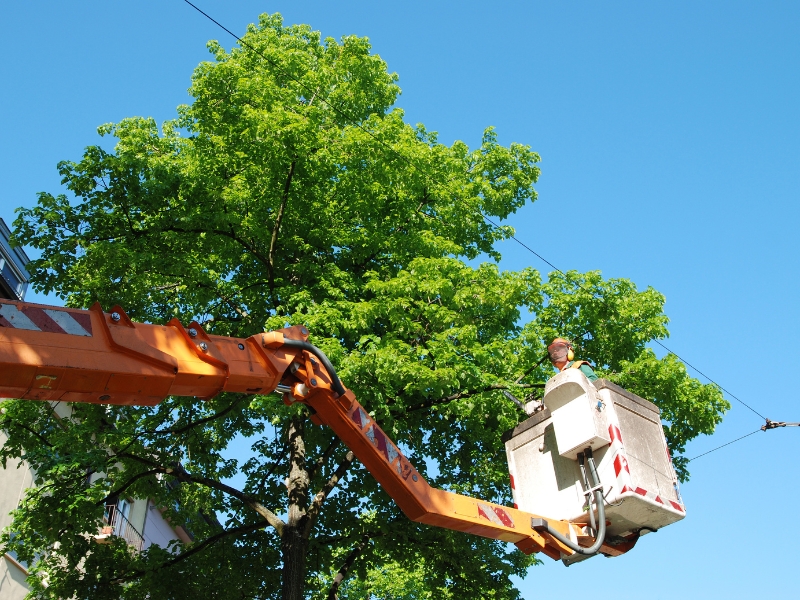
What techniques do arborists use to trim the tree efficiently and safely?
Efficient, safe work blends biology, rigging, and precise site controls. Pre-work assessments identify hazards, traffic, and drop zones. Using reduction cuts back to strong laterals. Avoids topping shock while maintaining stability and appearance. Here are the safety and efficiency techniques:
- Site assessment: Map hazards, utilities, and fall zones before tools start.
- Precision cuts: Use correct notches and back-cuts for clean fibres and control.
- Load-sharing rigging: Lower heavy pieces to prevent shock loads on unions.
- Tool hygiene: Disinfect blades between trees to limit disease transmission.
- Communication: Maintain radio or visual signals with a designated spotter.
- Traffic management: Establish exclusion zones and install appropriate signage at public interfaces.
- Documentation: Record work scope for future maintenance planning.
Work near roads, schools, or sensitive sites follows set controls under tree trimming and arborist safety guidelines in NSW, ensuring competency, equipment standards, and public safety are up to scratch. Efficiency rises when planning is solid and cuts are minimal but strategic.
Final thoughts
Balance comes from restraint with purpose. Start with clear goals—safety, shade, and fit with the garden—then guide growth with minor, well-timed adjustments. Significant, occasional cuts tend to backfire by triggering weak, fast shoots and prolonged recovery. For options that respect form while protecting people and property, ask The Yard about safe and reliable tree care services that create pathways that keep trees looking good while day-to-day life runs smoothly.