

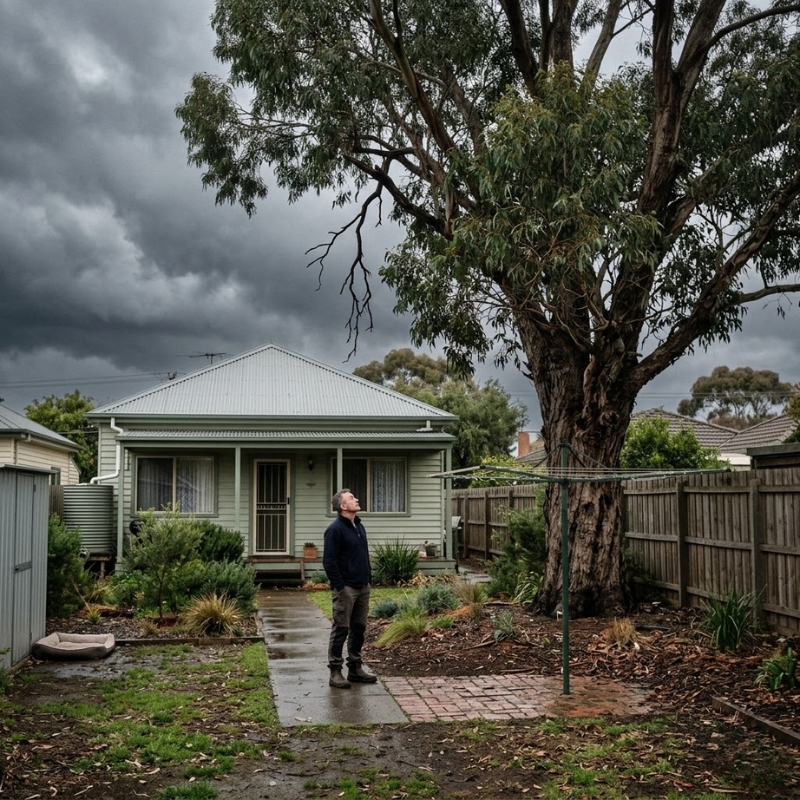
Melbourne storms don’t always give you much warning. One day it’s calm, the next you’ve got strong wind gusts, heavy rain, and saturated ground that turns “usually fine” trees into a real risk for homes, cars, fences, and neighbours.
The tricky part is that tree failures aren’t random. In most cases, there were early clues — deadwood, weak branch unions, hidden decay, or root-zone problems — and storm conditions simply pushed the tree past its limit.
This guide is designed to help Melbourne homeowners do a smart, safety-first check before high winds arrive, and to know what to do after a storm without taking unnecessary risks.
Along the way, you’ll see where DIY checks end and where professional assessment matters (especially around powerlines and structurally compromised trees).
Why storms in Melbourne can change tree risk fast
Storm risk isn’t just about wind speed. It’s about the combination of factors that affect stability on the day:
• Wind direction and gustiness (sudden gusts can break weak unions)
• Heavy rain that saturates soil (roots lose “grip” and trees can uproot)
• Soft, waterlogged ground after several wet days
• Past pruning or storm damage that created weak points
• Tree species traits (some shed branches more readily than others)
• Targets underneath (a tree over open lawn is very different to a tree over a driveway)
A tree can look healthy from a distance and still be at risk because many failures begin internally — decay inside a trunk, a cracked union hidden by foliage, or root damage you can’t see until you know what to look for.
Quick answer
If you’re short on time, prioritise three zones:
• Canopy: dead branches, hanging limbs, rubbing branches, cracks at unions
• Trunk: splits, cavities, fungi, fresh peeling bark, sudden leans
• Base/roots: lifted soil, new gaps in soil, exposed roots, water pooling, cracking around the trunk flare
The 10-minute pre-storm tree check (safe DIY version)
You don’t need ladders or chainsaws for a meaningful check. You do need daylight, calm conditions, and a “look from multiple angles” approach.
1) Look up: canopy and branches
Stand well back and scan the canopy like you’re reading a map.
Look for:
• Deadwood: branches with no leaves when the rest of the tree is full, or brittle-looking limbs
• Hangers: broken branches caught in the canopy (especially after previous wind)
• Rubbing/crossing branches: they wear against each other and create weak points
• Heavy end-weight: long, extended limbs reaching over roofs/driveways
• Sudden canopy thinning: may indicate stress, pests, or root issues
• Cracks at major unions: splitting where big limbs attach
If you see a hanging limb, treat it as urgent. Don’t go underneath it and don’t try to pull it down yourself.
2) Look at the trunk: stability and decay signals
Walk around the trunk (as far as access allows).
Look for:
• Vertical cracks or splits (especially new ones)
• Cavities or hollows that appear to deepen year to year
• Loose, peeling bark with soft timber underneath
• Fungal growth (mushrooms/brackets) on the trunk or at the base
• Old wounds from previous limb removal that didn’t seal well
• Two main stems forming a tight “V” (often a weak union, especially if there’s included bark)
Not all hollows mean “danger,” but hollows plus other defects can significantly increase risk in high winds.
3) Look down: the base and root zone
Storm-related failures in Melbourne often involve wet ground and root movement.
Look for:
• Soil heave: lifted or cracked soil on one side of the tree
• New gaps between soil and roots (as if the tree “shifted”)
• Leaning that seems new (compare to old photos if you can)
• Pooling water around the trunk (suggesting drainage issues)
• Root damage from recent digging, landscaping, or driveway works
• Fungal bodies at the base (can indicate root decay)
If you see soil lifting or cracking near the base, keep people away from the fall zone. That’s a classic sign the root plate may be moving.
Q&A: Can a healthy-looking tree still fail in a storm?
Yes. A tree can have a full canopy and still have hidden decay, a weak union, or compromised roots. Storms expose those weaknesses quickly, especially when the ground is saturated.
How to “risk score” a tree quickly: defect + target + conditions
A simple way to think about it is:
• Defect severity: How serious is the weakness you can see?
• Target value: What’s underneath if it fails? (roof, cars, neighbour’s fence, footpath)
• Conditions: Are winds increasing, and is the ground wet?
A moderate defect over an open lawn might be “monitor.”
That same defect over a driveway during a wet, windy week becomes “act sooner.”
If you’re unsure, start by mapping your property’s “targets”:
• house roof lines, pergolas, solar panels
• cars/driveways
• fences and shared boundary lines
• footpaths and nature strips
• play areas
That mapping alone makes storm preparation sharper because you’ll focus on the trees that could actually cause harm.
The storm-season warning signs Melbourne homeowners often miss
These are the subtle signs that tend to show up months before failure.
Included bark and weak unions
When two stems grow tightly together in a V-shape, bark can get trapped between them (included bark). That union is often weaker than it looks and can split under wind load.
Clues:
• tight V-shaped junction
• a visible line or seam down the union
• swelling around the joint
Long, overextended limbs
Branches that reach far out can act like levers in the wind. Even if they don’t snap, they can crack at the join, especially if there’s decay or past poor pruning.
Clues:
• limbs extending well beyond the canopy balance
• weight concentrated at the tips
• limbs that sway noticeably more than the rest
Deadwood that blends in
Dead branches can be hard to spot until leaves drop or the light hits them right.
Clues:
• twiggy ends with no new growth
• brittle, grey appearance
• no leaf buds in season
Fungal growth
Fungal fruiting bodies (brackets, mushrooms) can indicate internal decay — sometimes in the trunk, sometimes in roots.
Clues:
• recurring fungi in the same location
• soft timber around the area
• cracking or bulging nearby
Root-zone disturbance
Tree roots don’t like surprise changes. Trenching, paving, soil level changes, and drainage alterations can weaken anchorage.
Clues:
• recent construction near the tree
• raised garden beds built over roots
• soil compacted by vehicles
• new lean following works
If you want a simple way to organise these checks, keep a dedicated tree storm safety checklist you can run every year before the wild weather ramps up.
What not to do before a storm
Storm anxiety makes people do risky things. These are the big “don’ts”:
• Don’t climb ladders to cut branches “quickly” before the wind arrives
• Don’t cut large limbs without understanding load and balance (it can make failure more likely)
• Don’t work near powerlines — ever
• Don’t remove roots or dig near the base to “help drainage” right before a storm
• Don’t park cars under suspect trees because “it’ll probably be fine”
If high winds are forecast, your goal is hazard reduction through safe prep:
• move vehicles away from risk zones
• secure loose outdoor items
• keep people away from hazardous trees
• plan what you’ll do after the storm, not during it
For broader storm preparedness guidance and safety warnings, VICSES has practical advice on storms and property safety: VICSES storm information.
Melbourne-specific storm prep: what to check by property type
Inner suburbs with tighter blocks (Brunswick, Coburg, Northcote-style lots)
• Trees often overhang multiple targets (your roof + neighbour’s fence)
• Canopies can be constrained, creating uneven weight distribution
• Access is tighter, making “after storm” work more complex
Focus on:
• weak unions and heavy limbs over structures
• hangers trapped above walkways
• boundary-side limbs that could cause disputes after damage
Bayside and coastal-influenced pockets
• Stronger wind exposure can increase branch drop risk
• Salt air isn’t the same issue as in some other cities, but wind loading matters
• Older trees near foreshore corridors can take a beating in gusty fronts
Focus on:
• canopy balance and overextended limbs
• signs of previous storm damage that never got addressed
Leafier eastern suburbs (Camberwell, Kew, Glen Iris-style canopy streets)
• Larger established trees are common
• Root zones may be affected by driveways, landscaping, and irrigation
Focus on:
• root-zone changes (watering patterns, drainage)
• fungi at bases and hollows in older trunks
• large limbs over roofs and driveways
Q&A: Should I prune before storm season?
Selective, correct pruning can reduce risk (e.g., removing deadwood, reducing end-weight, improving structure). Poor pruning (topping, random lopping, removing the wrong limbs) can increase risk by creating weak regrowth and imbalance. If you’re not confident, stick to inspection and hazard awareness and get an assessment.
The day before high winds: practical, low-risk actions
If a windy front is coming in the next 24–48 hours, focus on actions that don’t involve cutting:
• Move cars away from trees with visible deadwood or heavy overhang
• Clear outdoor furniture and loose items (they can damage trees and vice versa)
• Keep kids/pets away from trees with hangers or cracks
• Avoid using outdoor areas under large canopies during peak gusts
• Check gutters and downpipes so water drains away (reduces pooling near roots)
• Take quick “reference photos” of leaning trees or cracks (useful if things change)
If you’re unsure whether a tree crosses the line into “danger,” use a simple prompt: Would I feel comfortable standing under it during the strongest gust?
If the answer is no, treat it as a hazard zone.
A structured storm season tree inspection routine (even twice a year) helps you catch issues when they’re still manageable.
After the storm: what to do (and what to avoid)
Storm aftermath is where injuries happen. Treat it like a hazard scene.
Do not do this
• Don’t touch anything tangled with power lines
• Don’t cut branches under tension (they can spring violently)
• Don’t climb onto roofs to clear branches during unstable conditions
• Don’t stand under hung-up limbs to “see where it’s stuck”
Do this instead
• Keep people away from damaged trees and drop zones
• Look for hanging limbs and cracked unions from a safe distance
• Photograph damage for records (from safe positions)
• Check for new leans or lifted soil around bases
• If a tree is blocking access, don’t rush into cutting unless you have training and equipment
For safety guidance during storms and damage events, follow VICSES advice and warnings: VICSES storm information.
Q&A: What does “root movement” look like after a storm?
It can look like freshly cracked soil, lifted turf, a visible gap opening around roots, or the tree leaning more than before. Sometimes you’ll hear creaking during gusts. If you suspect root movement, treat it as urgent and keep clear.
The “hidden” storm risks: soil, water, and root health
In Melbourne, heavy rain plus wind is a classic combo. Even if a tree’s canopy is fine, wet ground can undermine stability.
Poor drainage and water pooling
If water consistently pools around a tree, roots may be stressed and oxygen-starved. Over time that can reduce anchorage strength and increase susceptibility to disease.
Compaction
Driveways, parking, and heavy foot traffic can compact soil, limiting root growth and water movement. Trees then become more dependent on shallow roots — not ideal in the wind.
Construction impacts
Even small trenching can sever structural roots. A tree may look unchanged for a year or two and then begin declining, making it more storm-prone later.
If you’re seeing these issues along with canopy problems, it’s a good moment to document what you see and seek a proper assessment.
If you’re trying to decide whether you’re looking at a “monitor” situation or a “serious” one, the key is learning signs a tree is unsafe — especially cracks at unions, hangers, soil heave, and significant deadwood over targets.
Simple prevention that makes a big difference over time
Storm prep isn’t only a “right before the storm” task. These habits reduce risk across the year:
• Annual or twice-yearly visual inspections (spring + late summer is a good rhythm)
• Removing deadwood early (before it becomes a hazard)
• Avoiding harsh topping or indiscriminate lopping
• Keeping root zones protected during landscaping works
• Managing drainage so water doesn’t pool at bases
• Keeping trees structurally balanced (especially those near roofs/driveways)
You don’t need to be an arborist to notice change. The most valuable skill is consistency — noticing when something is different from last season.
FAQs
How do I know if a tree might fall in high winds?
Look for a combination of defects (cracks, weak unions, significant deadwood), root-zone warning signs (soil heave, new lean), and storm conditions (saturated ground). The risk rises sharply when a defective tree sits over a high-value target like a roof or driveway.
Is a leaning tree always dangerous?
Not always. Some trees grow with a natural lean. The concern is a new or increasing lean, especially after heavy rain, or a lean paired with lifted soil, cracking, or root damage.
What’s the most dangerous thing to do after a storm?
Working near powerlines or cutting branches under tension without training. Keep clear and treat damaged trees as unpredictable until assessed.
Should I remove all big branches over my roof “just in case”?
Not necessarily. Removing the wrong limbs can create imbalance and stress. The safer approach is targeted deadwood removal, structural pruning where needed, and regular inspections that focus on defects and targets.
Can trees drop branches even if they don’t fall?
Yes. Branch drop can happen from deadwood, weak unions, previous storm damage, or sudden gusts. That’s why the “look up” canopy scan matters.
Where should I look first during a quick check?
Start with what’s over targets (roof, driveway, neighbour’s fence), then check the trunk for cracks/decay signals, then the base for soil movement and drainage issues.