

If you’ve recently had a tree removed from your Melbourne property, you’re likely left with one frustrating question: What should you do with the stump?
Tree stumps are more than just an eyesore. They can interfere with landscaping plans, attract pests, become a tripping hazard, and even cause issues with mowing or future construction. For many Melbourne homeowners, deciding how to deal with a stump isn’t always straightforward, especially when balancing cost, garden impact, and long-term usability of the space.
For most people, the decision comes down to stump grinding vs stump removal. While the two options are often mentioned together, they differ significantly in terms of process, disruption, cost, and suitability for residential properties.
This guide breaks down everything Melbourne homeowners need to know, helping you confidently choose the best option for your property, soil type, and future plans.
What Is Stump Grinding?
How stump grinding works
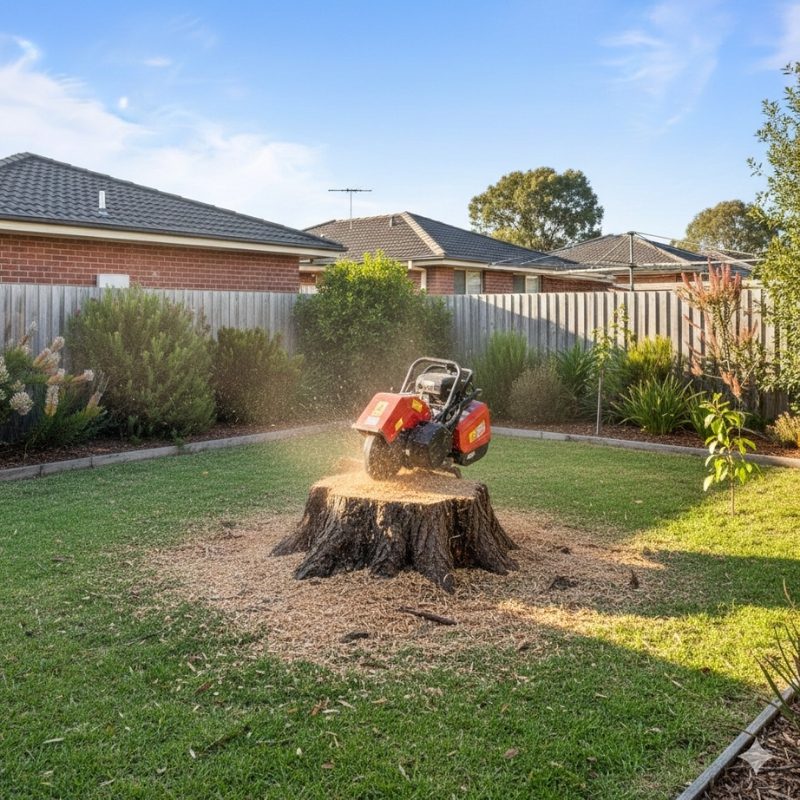
Stump grinding involves using specialised machinery to grind the visible tree stump down below ground level, typically 150–300mm beneath the soil surface. The machine uses a rotating cutting wheel that gradually reduces the stump to small wood chips.
This method focuses on removing the stump that you can see and interact with, rather than disturbing the entire underground root system. It’s especially popular across Melbourne suburbs where properties are smaller, access can be tight, and homeowners want minimal disruption.
What remains after stump grinding
After the process, you’ll usually be left with:
• Wood chips or mulch (often reusable in the garden)
• A shallow depression where the stump was
• Underground roots that naturally decompose over time
In most cases, the mulch can be reused as garden cover or removed, depending on your preference. Once topped up with soil, the area can be turfed, planted, or landscaped relatively quickly.
This makes stump grinding a fast, low-impact solution, particularly suited to Melbourne’s established residential suburbs where protecting lawns, paving, and nearby plants is important.
What Is Stump Removal?
How stump removal differs
Stump removal is a much more invasive process. Rather than grinding the stump down, the entire stump and its major root structures are excavated from the ground.
This process typically involves:
• Digging around the stump
• Cutting and pulling out large roots
• Removing a significant volume of soil
Because of this, stump removal often requires heavier machinery and more labour, especially when dealing with mature trees or deep root systems.
When stump removal is used
Stump removal is generally reserved for situations where:
• Construction or foundations are planned
• Plumbing or drainage lines are affected
• Complete root elimination is essential
For most Melbourne homes, this level of removal is unnecessary unless there’s a specific structural or development-related reason to remove everything below ground.
Key Differences Between Stump Grinding and Stump Removal
Process comparison
- Stump grinding shreds the stump below ground level
- Stump removal excavates the stump and roots
Time required
- Grinding is usually completed within hours
- Removal can take a full day or more
Impact on your property
- Grinding causes minimal soil disruption
- Removal often damages lawns, garden beds, and nearby structures
For Melbourne homeowners who want their yard usable again as soon as possible, this difference alone often makes stump grinding the preferred option.
Cost Comparison in Melbourne
Stump grinding costs
For Melbourne homeowners, stump grinding is typically:
• More affordable
• Priced based on stump size and access
• Ideal for residential blocks and small yards
Costs can vary depending on factors such as stump diameter, ease of access, and proximity to fences or buildings. However, it remains one of the most cost-effective stump solutions available.
Stump removal costs
Stump removal is generally:
• Significantly more expensive
• Affected by root spread and soil conditions
• Costlier in inner suburbs with limited access
In most cases, stump grinding is the more cost-effective choice for homeowners who simply want the stump gone without major excavation.
Which Option Is Better for Melbourne Gardens?
Soil and landscaping considerations
Melbourne’s soil types — particularly clay-heavy soils — can make full excavation disruptive and slow to recover. Stump grinding:
• Preserves surrounding soil structure
• Allows for quicker replanting
• Reduces erosion and water pooling
Because the majority of the soil remains undisturbed, garden recovery is faster and more predictable.
Replanting and turf replacement
After stump grinding, homeowners can:
• Add topsoil to level the area
• Lay turf or grass seed
• Plant shallow-rooted plants or shrubs
Stump removal often delays landscaping due to soil instability and the need for compaction before planting.
Do Tree Roots Regrow After Stump Grinding?
One of the most common concerns homeowners have is whether tree roots will regrow after grinding.
What actually happens underground
- Roots gradually decay naturally
- No new tree growth occurs
- The stump cannot regenerate
While roots may remain underground for some time, they don’t cause problems for most gardens. Over time, they break down and integrate back into the soil naturally. For the vast majority of Melbourne tree species, stump grinding is completely sufficient.
Safety, Access, and Suburban Considerations
Tight access homes
Many Melbourne properties have:
• Narrow side access
• Established fences
• Nearby paving or driveways
Stump grinding equipment is designed for tight suburban spaces, while stump removal machinery often struggles to access these areas without damage.
Underground services
Grinding avoids deep excavation, reducing risk around:
• Water pipes
• Gas lines
• Electrical conduits
For safety guidance, homeowners should always consider recommendations from the Victorian Government’s tree and land management guidelines, which outline obligations around underground services and site safety.
Environmental Impact Comparison
Sustainability benefits of stump grinding
- Less fuel consumption
- Reduced soil disturbance
- Mulch reuse onsite
Waste management
Stump removal often requires:
• Soil disposal
• Root transport
• Additional landfill waste
For environmentally conscious Melbourne homeowners, grinding is the lower-impact solution.
When Is Full Stump Removal the Better Choice?
While stump grinding suits most situations, stump removal may be better if:
• You’re building extensions or retaining walls
• You need complete root clearance
• Structural integrity is affected
These scenarios are less common but should be assessed professionally before deciding.
Professional Advice Matters
Choosing the wrong option can lead to:
• Unnecessary costs
• Garden damage
• Delayed landscaping
Working with an experienced arborist in Melbourne ensures the solution is matched to your property’s specific conditions.
Why Most Melbourne Homeowners Choose Stump Grinding
Summary of benefits
- Faster completion
- Lower cost
- Minimal property disruption
- Environmentally responsible
- Ideal for residential blocks
For most homeowners, stump grinding delivers the best balance of practicality and value.
If you’re considering professional stump grinding services in Melbourne, working with specialists ensures safe, efficient results tailored to your property.
For larger projects involving multiple trees or site preparation, comprehensive land clearing services in Melbourne may also be worth exploring alongside stump grinding.